

 Online Reporter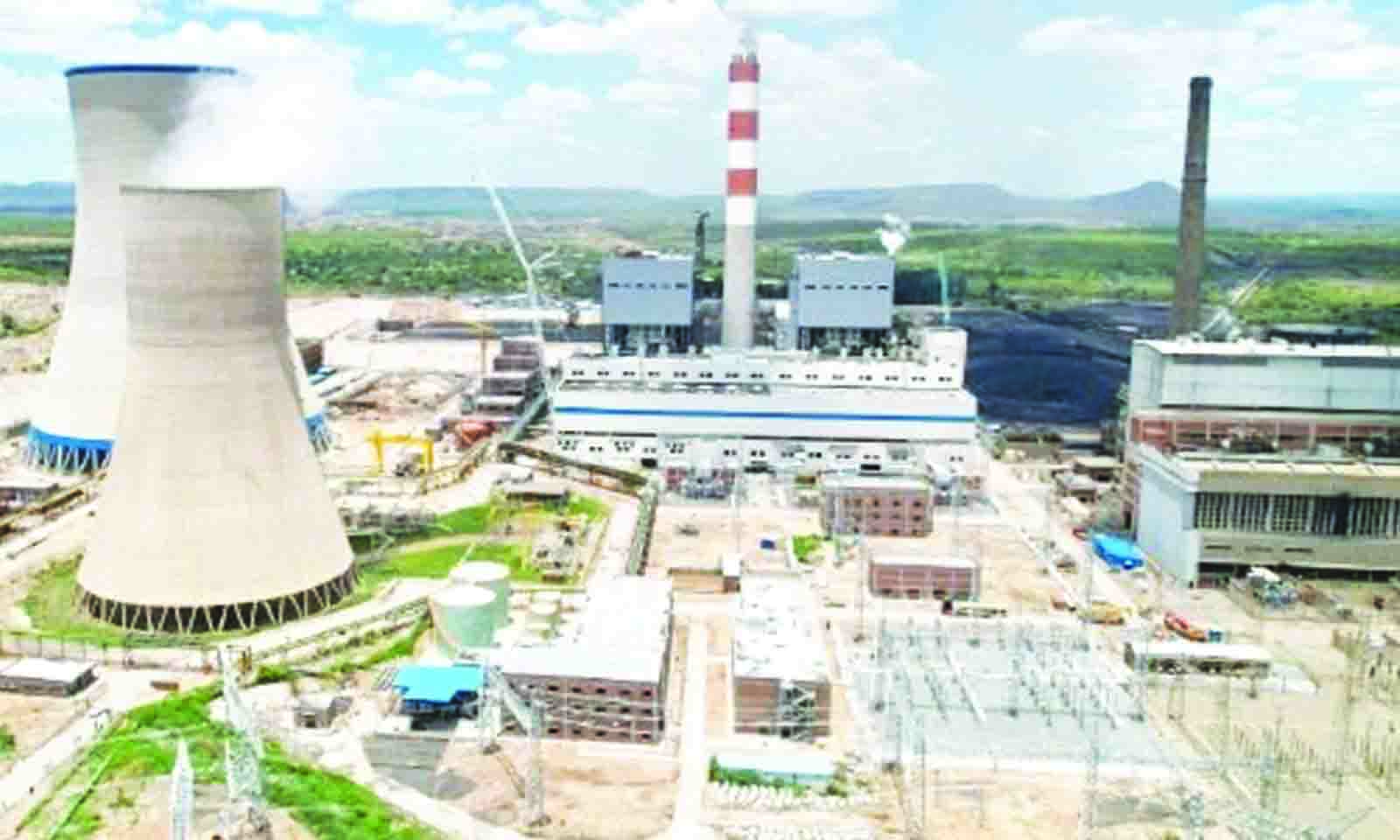
Patrick Chitumba, Zimpapers Reporter
A technical fault at the giant Hwange Thermal Power Station’s Unit 8 has disrupted the country’s steady electricity supply, with the power utility warning that repairs could take up to 10 days.
Most parts of Zimbabwe experienced unusual power outages over the weekend, severely affecting normal business operations and forcing many enterprises to rely on generators.
In a statement, Zesa Holdings confirmed that the disruption was due to a technical fault that led to the temporary shutdown of Unit 8, which has a generation capacity of approximately 300 megawatts.
The power utility stated that the unit would be offline for 10 days starting Monday, to allow for maintenance works aimed at restoring optimal performance at the station. During this period, the country is expected to endure prolonged power outages.
However, Zesa Holdings has assured customers that efforts are underway to minimise the impact of the fault.
“Zesa Holdings wishes to inform its valued stakeholders that Hwange Unit 8 has been taken off the grid due to a technical fault. The unit will be out of service for 10 days while restoration work is carried out.
During this outage, Hwange Unit 7 will remain operational, generating 335MW to support system stability,” read the statement.
Despite the setback, Zesa Holdings noted that generation at Kariba South Power Station has been increased, with careful management of water allocations, to help offset the temporary shortfall.
“We sincerely apologise for any inconvenience this may cause and appreciate your understanding as we work to restore the unit to service,” the statement added.
Consumers had recently been enjoying improved power supplies, as the country’s generation capacity had risen, with daily output peaking at 1 600 megawatts.
However, following the fault, local generation has dropped to around 1 296 megawatts.
Hwange Power Station, which previously contributed up to 1 000 megawatts to the national grid, recorded a decline to 757 megawatts yesterday, down from 655 megawatts on Monday and 640 megawatts on Sunday.
Commenting on the development, prominent businessman and past president of the Zimbabwe National Chamber of Commerce (ZNCC), Dr Tinashe Manzungu, said the Government’s earlier goal to double power output by year-end should be pursued to ensure consistent supply to industry.
“Constant power supply would be a game-changer for industries in Zimbabwe. With stable electricity, industries can operate at full capacity, reduce downtime and boost overall productivity. This, in turn, would lead to improved efficiency and competitiveness in the global market,” he said.

Dr Manzungu warned that Zimbabwe’s industrial sector could lose an average of $80 million monthly due to production delays and the high costs of alternative energy sources such as diesel generators.“Reliable power supply would significantly reduce these losses and make Zimbabwe a more attractive destination for foreign investors,” he added.
Dr Solomon Matsa, president of the Business Economic Empowerment Federation (BEEF), commended the Government and Zesa for their efforts to ensure consistent power supply to both industry and households.
“Constant power supply would have a positive impact on small and medium-sized enterprises (SMEs), which are the backbone of Zimbabwe’s economy. SMEs often struggle to stay afloat due to the unpredictability of electricity supply, which forces them to rely on expensive alternative sources.

With stable power, SMEs can operate more sustainably, contributing to the country’s economic growth and development,” he said.
Dr Matsa urged industry players, mining companies, and property owners to complement ZETDC’s efforts by investing in renewable energy sources such as solar power, to help stabilise the national supply and reduce reliance on unpredictable resources like water and coal.
“Zimbabwe has significant potential for solar energy, with solar radiation averaging 16 MJ/m² during winter and 22 MJ/m² in midsummer,” he said. “By harnessing this potential, Zimbabwe can reduce its dependence on hydroelectric power, which is vulnerable to climate fluctuations and droughts.”
Last month, power output was also affected by the shutdown of Hwange Unit 3 for 44 days, which reduced the station’s total output by about 80 megawatts. Despite an average 18.2 percent increase in total generation capacity during the second quarter of 2025, a 600-megawatt deficit persisted, as peak demand rose to 2,200 megawatts.
To address this, the power utility has secured a US$210 million loan for infrastructure upgrades and to support power imports. The investment will be used to upgrade the national grid, implement smart metering, and combat vandalism.
Of the total, US$50 million will be allocated to power imports, and US$5 million will go towards upgrading the Supervisory Control and Data Acquisition (SCADA) system, as Zesa aims to improve electricity supply and efficiency. Smart meters will enable remote management, ensuring a seamless experience for all users.
According to the utility, peak power demand has increased to 2 200 megawatts in 2025, up from 2 000 megawatts the previous year.




In a country that aspires for Vision 2030, failure of one generator at Hwange shouldn’t have been a matter to worry about. Something is not right with how the Power Development Ministry is run. We cannot always plunge into darkness each time a generator malfunctions. What happened to contingency plans? Do we even have such? We know the minister responsible is as blind about power generation as he is about heart surgery but Madam Perm Secretary you are an electrical engineer with a PhD in something, not sure what, what are you doing in your office? If development was directly proportional to the number of people claiming to have PhDs, Zimbabwe would be there at the top with the most developed countries.