Online Reporter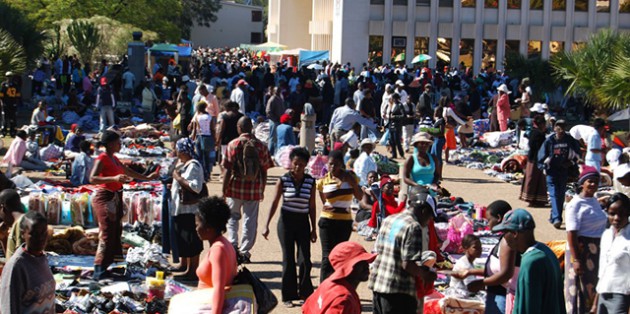
Sikhulekelani Moyo
Zimpapers Business Hub
THE informal sector has been identified as a critical player in completing the supply and value chains, with fresh produce being able to reach different markets on time, thereby reducing post-harvest losses.
This has seen the Government, in partnership with local authorities, traders’ associations, Micro, Small and Medium Enterprises (MSMEs) bodies and developmental partners working together to develop markets and capacitate players with the required knowledge, with formalisation being encouraged.
Recently, Bulawayo witnessed the establishment of the Bulawayo MSMEs Apex Body, which is meant to be the bridge between MSMEs and the Government and local authorities.
In an interview, Bulawayo MSMEs Apex Body head of secretariat, who is also Bulawayo Vendors and Traders Organisation (BVTO) executive director, Mr Michael Ndiweni, said the formalisation of MSMEs would help to protect the fresh produce supply and value chain, where traders have been playing a role to link the small holder farmers with different markets.
“Formalising the fresh value chain means that people can aggregate, and they get to know each other as agro entrepreneurs, aggregate bulk products, for example, one farmer is producing carrots, another produces cabbage, but they have to hire different trucks to transport produce from the farms to market,” said Mr Ndiweni.
“So, if they formalise, they are known and they have systems in place that can help bring them together, or through associations they can aggregate their produce and bring it to the market, sharing the costs.
“Working on your own, you may not be able to maximise your profits, so if there is formalisation of those in the agro-value chain, they are supported, they are going to get more revenue,e and the country will also benefit in terms of food security.”
The launch of the BMSMEs Apex Board comes at a time when the informal sector continues to play a critical role in Zimbabwe’s economy.
In Bulawayo, thousands of families depend on informal trading for their livelihoods, with the sector widely recognised as one of the biggest employers outside the formal job market.
Nationally, studies indicate that the informal economy contributes significantly to household incomes and has become a major driver of job creation at a time when formal sector opportunities remain limited.
The establishment of the apex board is expected to streamline communication between informal traders and authorities, while ensuring that the sector contributes more meaningfully to the city’s economic growth and job creation agenda.
Meanwhile, about 300 traders and 150 smallholder farmers have benefited from the Market Aggregation Linking Markets and Innovation (MALI) project, implemented by BVTA.
The project, being funded by the Swedish organisation We Effect, started in May 2023 and is meant to empower women and youth.
Spanning over four years and operating in Bulawayo, Umguza, Umzingwane, and Matabo, the project has unlocked inclusive and sustainable market opportunities across key agriculture value chains, horticulture, legumes, fruits, and poultry.