admin
admin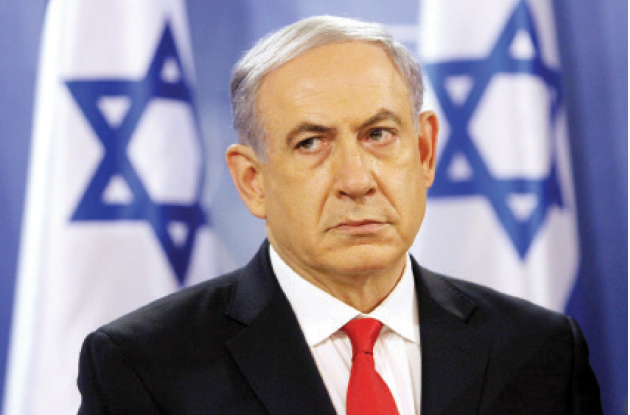

Haifa – Israelis are heading to the polls in a crucial election seen as a referendum on Prime Minister Benjamin Netanyahu, who ruled out a Palestinian state as part of a last-ditch appeal to right-wing voters.
Around six million Israelis were eligible to take part in the vote yesterday to elect 120 deputies for the Knesset, or parliament.
Shortly after the polls opened at 7:00am, Netanyahu and his family cast their ballots at a polling station in West Jerusalem.
Netanyahu’s ruling out of a Palestinian state appeared to have failed to boost his electoral prospects. According to the opinion poll by Israeli daily Haaretz , the Zionist Union led by Isaac Herzog is ahead of Likud by four seats.
National elections are held every four years, unless Israel’s parliament, the Knesset, votes to dissolve the government and hold new elections. In early December, Netanyahu fired Justice Minister Tzipi Livni and Finance Minister Yair Lapid and announced elections for the 20th Knesset.
Although Herzog and Livni campaigned on the promise to rotate in the role of prime minister, Livni announced late on Monday that she was forgoing that agreement and that only Herzog will serve as the premier if the Zionist Union wins.
The move sparked backlash from opponents, including the prime minister. “Two things are evident: the first is that they are lying – either that they lied before or they’re lying now,” Netanyahu said. “The second thing – they are unable to handle the pressure.”
Former Israeli President Shimon Peres publicly endorsed the Zionist Union’s Herzog.
Zionist Union candidate Manuel Trajtenberg said that Israel “is at a crucial junction right now. We have hit a dead end in terms of socio-economic issues, as well as our international diplomatic relations. Change has to come”.
“With all these defects, Israel is a very vibrant democracy and people have a good sense of knowing when it’s time to change,” Trajtenberg said. “I trust in the people and the democratic tradition.”
Analysts explain that Likud’s performance may be harmed by the emergence of new right-wing parties, such as the Kulanu party, which draws from Likud’s traditional support base. “The question now is whether it will weaken Likud enough to further fragment the party’s dominant position on the right,” Dahlia Scheindlin, an independent pollster, told Al Jazeera.
“If it further fragments it, it could mean that Likud may not be able to [catch up to] the Zionist Union,” she added. The Likud party is led by Prime Minister BenjaminNetanyahu, who started the campaign all but assuring that Likud would stay inoffice. But recent polls have rattled that confidence.



 Online Reporter