Online Reporter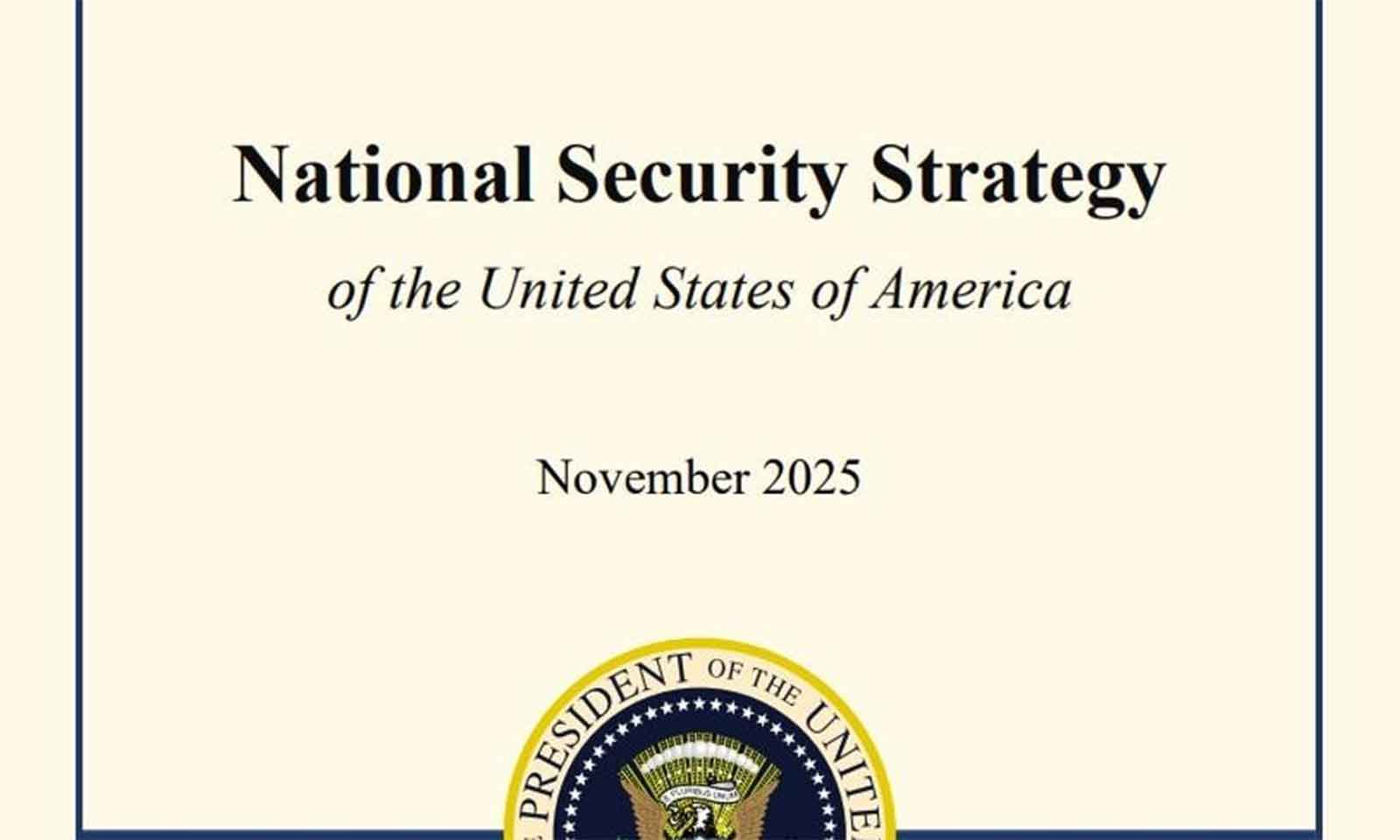
Farai Ian Muvuti
Correspondent
When the United States unveiled its 2025 National Security Strategy, it was described in Washington as a document of realism. In truth, it reads more like an elegy for a fading empire.
Underneath its language of sovereignty and strength, the document exposes an America haunted by the very paternalism that Europe once exported to the world.
The new strategy is framed around the restoration of national confidence, border control, and economic primacy. It celebrates the “civilisational self-assurance” of the West and warns against the dangers of globalism, migration, and moral decay.
It speaks of “fairness” and “merit” but in the same breath condemns diversity initiatives as threats to competence. It calls for partnership with “capable and reliable states,” yet defines reliability entirely by alignment with US interests.
If the colonial imagination once justified European expansion in the name of progress, this new American strategy justifies isolation and extraction in the name of sovereignty.
The empire has folded in on itself. The paternalism that was once directed outward – toward Africa, Asia, and Latin America – has turned inward, disciplining Europe and the so-called allies who must now “rediscover their greatness” under American supervision.
For Africa, this reversal should provoke not applause but reflection. The continent is no longer the exclusive target of Western tutelage; the West itself has become its own pupil, lectured by its creation.
Yet the logic remains the same. The 2025 National Security Strategy is not only a policy statement. It is a mirror in which the Western world confronts the contradictions of its own history, still unable to imagine power without hierarchy or partnership without control.
The section on Africa in the document is brief, but telling. It calls for a shift from aid to trade, from dependency to investment, yet it limits those investments to “reliable” partners.
The meaning is clear: cooperation is not based on equality but on obedience. Africa is invited to participate in global markets as a supplier of critical minerals and energy, not as a producer of ideas or technologies. This is a political economy of containment, not liberation.
To understand it, one must turn to post-colonial thought.
Frantz Fanon once warned that the colonised elite would inherit the habits of their oppressors – imitating the master’s speech, copying the master’s institutions, and mistaking imitation for independence.
Today, it is the West that performs this mimicry. America speaks the language of anti-globalism that Europe once used to police its colonies.
It seeks to protect its “way of life” as Europe once sought to protect its “civilisation.” The rhetoric of racial hierarchy has been replaced by the rhetoric of national hierarchy, but the structure of domination remains unchanged.
In this sense, Europe has become the first post-colony of its own empire. Washington now tells it when to arm, how to trade, and which wars to avoid or prolong.
The same institutions that once exported conditionality to the Global South – the IMF, the World Bank, and the transatlantic alliance – now impose new forms of conditionality within the West itself. What was once a global hierarchy has become an internal discipline.
Africa must watch this transformation closely. It offers both warning and opportunity. The warning is that the grammar of dependency is persistent. It changes form but not function.
Even when Africa is told it is entering a “new age of partnership,” the terms are still written elsewhere. The opportunity is that this Western introspection creates a rare moment of strategic space for Africa to think for itself.
The recent US-brokered peace signing between Rwanda and the Democratic Republic of Congo, celebrated in Washington as a triumph of diplomacy, should be read in this light. It is not the central story, but it illustrates the pattern. When African leaders fly across oceans to reconcile under another’s flag, they re-enact the very dependency they claim to transcend.
The peace of convenience becomes another form of supervision. Even the language of “access to rare earths,” spoken so casually by the American president, shows how African sovereignty is still valued in commodities rather than in consent.
The lesson for African policymakers is not that the West is malicious, but that it is trapped in its own mythology.
The United States is reasserting itself as a fortress economy while claiming to defend global freedom. Europe, for all its talk of autonomy, still seeks shelter in American approval. In such a world, Africa’s search for validation abroad is both outdated and dangerous.
Post-colonial theory teaches that true independence is not the absence of foreign influence, but the presence of internal coherence. A nation or a continent achieves autonomy when its economic logic reflects its social realities.
That means building markets that speak African languages, both literally and figuratively – markets where policy is shaped by the rhythm of African consumption, by the patterns of informal trade, and by the moral logic of communities rather than the algorithms of distant stock exchanges.
The challenge, then, is not whether Africa can attract investment but whether it can define the terms of investment. The continent must treat capital not as charity but as partnership.
It must learn to price its sovereignty as a premium asset, not a negotiable discount. This requires financial literacy at the level of governance: understanding the language of credit ratings, yield curves, and sovereign debt while refusing to reduce development to spreadsheets. Economic fluency is not submission; it is defence.
In a world where even Europe must obey the tutelage of Washington, Africa cannot afford to rehearse the same dependency. The continent must create its own moral index for growth.
It must measure progress not only in GDP or export volume but in the quality of citizenship, the strength of institutions, and the dignity of labour. It must stop waiting for the next global strategy to mention its name.
The 2025 US National Security Strategy reveals an empire seeking to secure its past rather than invent its future. Africa’s task is the opposite: to secure its future by letting go of the past. This means resisting both resentment and mimicry. The goal is not to reverse the hierarchy but to transcend it entirely.
Europe may now be haunted by its own paternalism. America may be consumed by the anxiety of decline. Africa must be neither the pupil nor the patient of either. The continent’s peace, prosperity, and power will not be written in the annexes of foreign strategies. They will be written in its capacity to imagine itself as a centre, not a periphery.
The empire, it seems, has come home to discipline its own children. Africa must not be tempted to return to that family.
Farai Ian Muvuti is CEO of The Southern African Times and Founder of Sankofa Capital. He champions African trade, investment, and digital innovation, linking businesses with global partners.