Online Reporter
Edison Chikamhi
Zimpapers Sports Hub
At one time, it was taboo for girls and women in Zimbabwe to play football.
Today, 20-year-old Esnath Chirambamuriwo is part of the Ngezi Platinum Stars senior women’s team in Mhondoro, a sign of how far the game has come. But her journey also reflects how much further it still has to go.
“I am glad that women’s football has been recognised. At least we now have a platform to showcase our talent,” she said.
Mercy Ndlovu, another budding footballer from Matabeleland North, is excited by the opportunities ahead of her.
That platform has been widened by the launch of the Munhumutapa Challenge Cup, a government-backed competition worth US$5 million per season over the next five years.
The tournament is expected to involve more than 4 000 girls and female officials, creating unprecedented access to competitive football.
Yet beneath the optimism lies a more complex story, one of progress tempered by persistent inequality between men’s and women’s football in Zimbabwe.
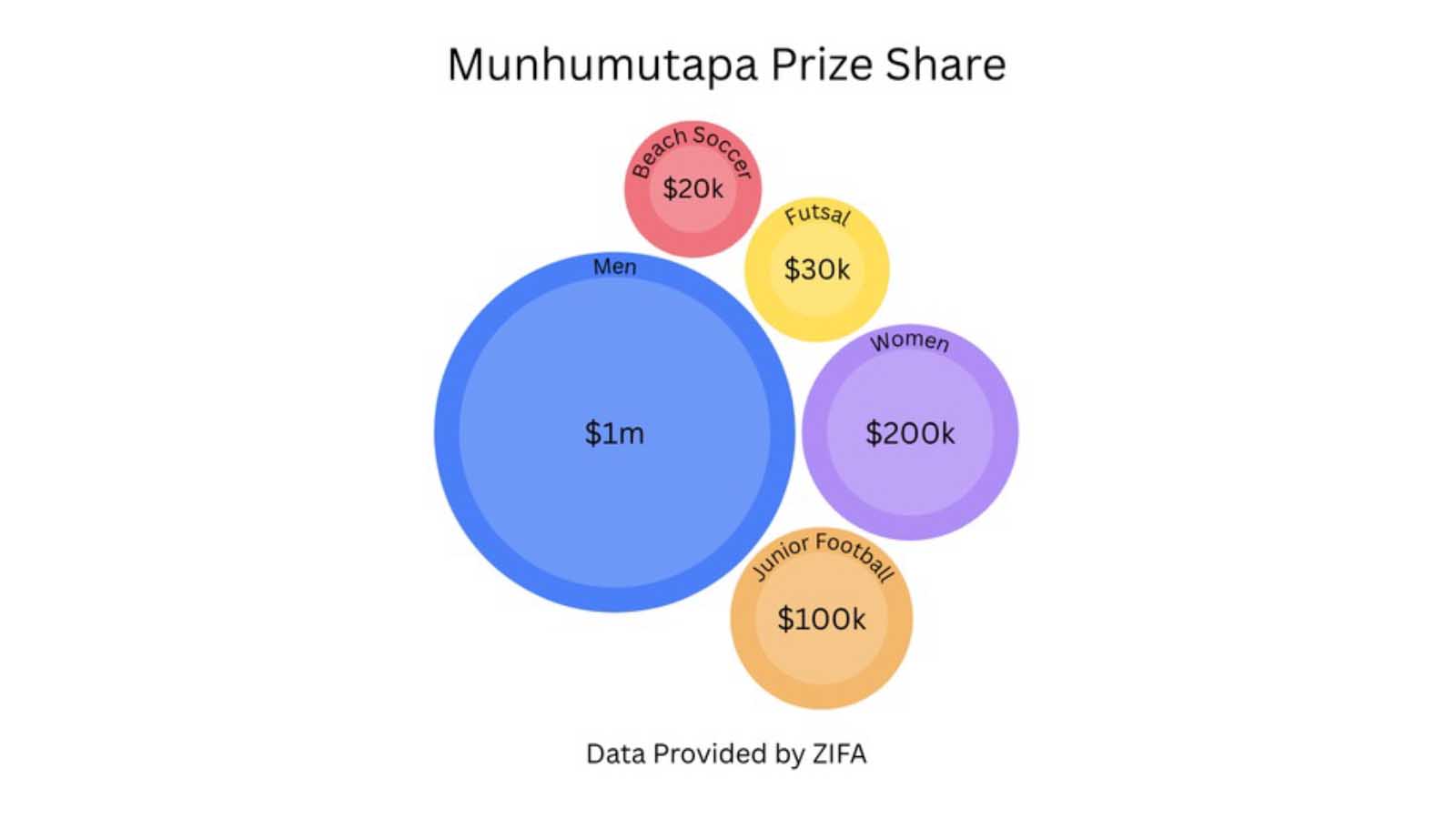
Despite the advent of this Munhumutapa Cup tournament designed to expand football opportunities, women account for just 16.5 percent of the participating teams and stand to receive only a fifth of the prize money awarded to men’s teams.
Reeling in the shadows
For decades, women’s football in Zimbabwe has struggled with chronic underfunding and limited support.
While the men’s Premier Soccer League enjoys a long-standing sponsorship of about US$1.1 million per season, women’s football has not enjoyed such a privilege for several years.
The Zimbabwe Women’s Premier Soccer League operates with little to no corporate backing and no title sponsorship. The 2026 ZWPSL season started with no title sponsor.
This is in stark contrast to neighbouring South Africa where the women’s league is sponsored to the tune of R17m (just over $1m) per season by Hollywoodbets.
The support makes the South African Women’s Super League more competitive and appealing. Naturally, this translates into stronger national team structures, hence their dominance at all levels in the region.
But north of the Limpopo, many Zimbabwean clubs are forced to self-fund, with financial constraints often leading to unfulfilled fixtures, withdrawals and chaos.
Girls from Mpopoma Sports Academy at some point failed to honour their match against Black Rhinos because they could not afford the transport costs from Bulawayo to Harare, which is almost a 1 000km round trip by road.
A significant number of games have failed to take place in the league because of the financial constraints.
In worse situations, some clubs have withdrawn from competitions.
The withdrawal of Maningi Queens from the women’s football league due to financial incapacitation has left many promising talents stranded.
Gweru-based Rise of Hope Academy is the latest team to pull out of the ZWPSL citing inability to meet the costs of topflight football obligations.
“This decision has not been easy for us as a club,” said club secretary-general Benson Chiguri.
“However, due to financial challenges and failure to secure sponsorship despite our efforts, we are now incapacitated to continue fulfilling our league obligations for the remainder of the season.”
At grassroots level, Young Flying Stars Sports Academy of Bulawayo are also finding it difficult to operate under the difficult circumstances.
The club’s director Collen Nyambiya believes women’s football is severely under-funded because of lack of commitment from the stakeholders.
He also feels the welfare of women footballers is neglected, as the majority does not earn decent wages.
Although women’s football stand to receive FIFA development grants ranging between US$50 000 and US$400 000 annually, stakeholders argue that this has not translated into sustainable growth at domestic level.
The disparities between men’s and women’s football is also evident at national level, where the men’s side, the Warriors, typically receive greater financial and logistical support than the women’s Mighty Warriors.
ZIFA vice-president responsible for women’s football, Loveness Mukura, admitted lack of structures and identity have weighed down women’s football.
“We need total structures from the bottom up. Our development pathway wasn’t clear. The focus has been on the elite league, neglecting the grassroots.
“So, guided by our strategic development document, we are saying we need to capacitate our provinces, have more visibility and then we trace the development and funding gaps. We are happy the Munhumutapa Cup gives us a solid platform for integration,” said Mukura.
The association’s vision was also corroborated by the Minister of Sport, Recreation, Arts and Culture, Anselem Sanyatwe.
“This initiative represents a strategic shift from fragmented competitions toward a coordinated, inclusive, and nationally integrated football development architecture capable of delivering long-term developmental impact,”” said Sanyatwe.
Numbers tell a deeper story
The Munhumutapa Challenge Cup is meant to bridge the gap. But a closer look at the participation figures by gender highlights both progress (rather intention) and imbalance.
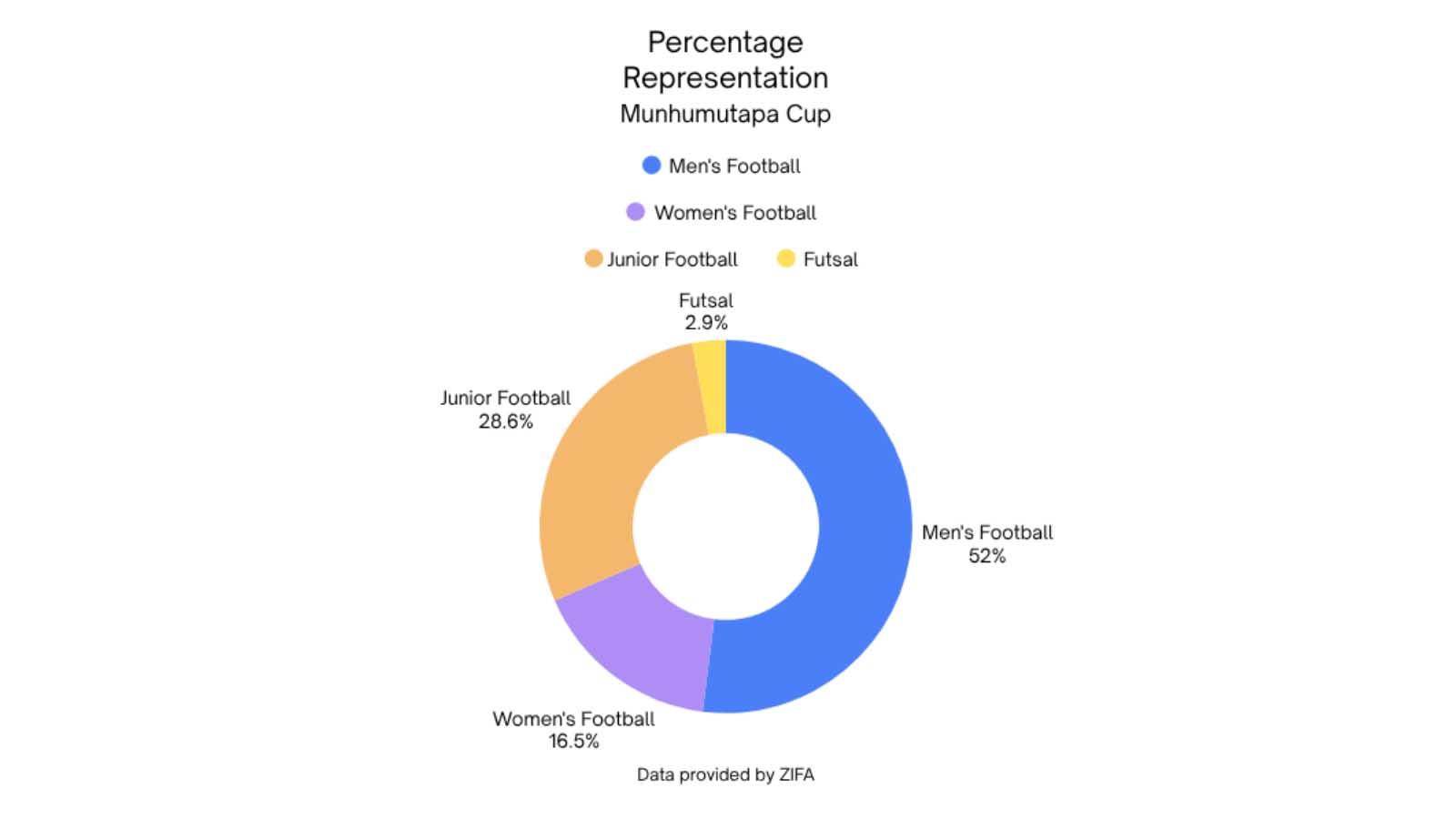
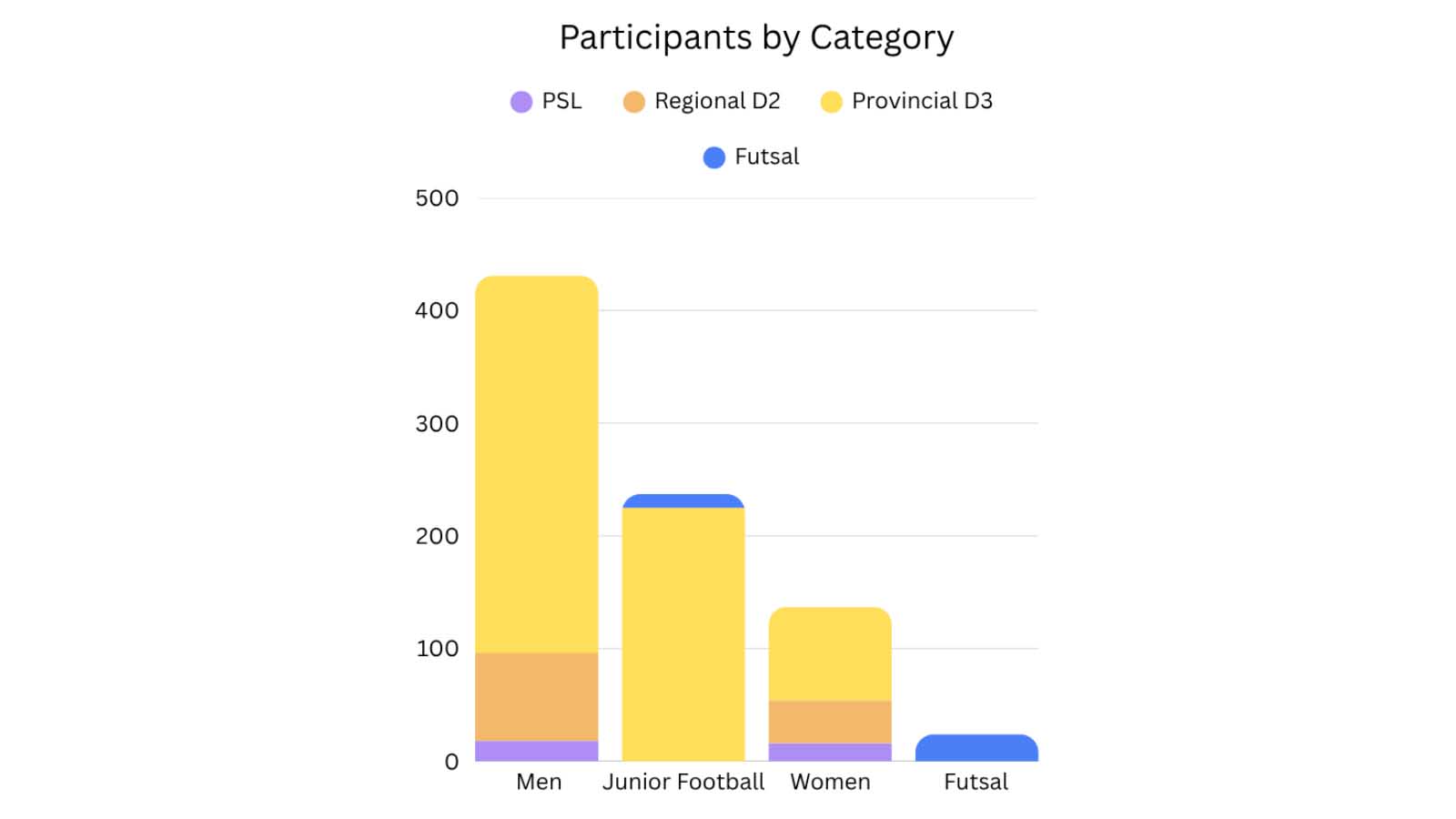
Out of 829 teams registered for the tournament, only 137 are women’s teams, which translates to just 16.5 percent of the total.
Men’s football dominates the competition with 431 teams (52 percent), while junior football accounts for 237 teams (28.6 percent). The tournament gives emphasis to grassroots football, yet women are still under-represented in the lowest tier – Division 3.
The participation gap underscores the inequalities that continue to define the game.
Uneven opportunities
Within the women’s competition itself, activity is concentrated in lower tier football in Harare, Bulawayo, Matabeleland North and Mashonaland West.
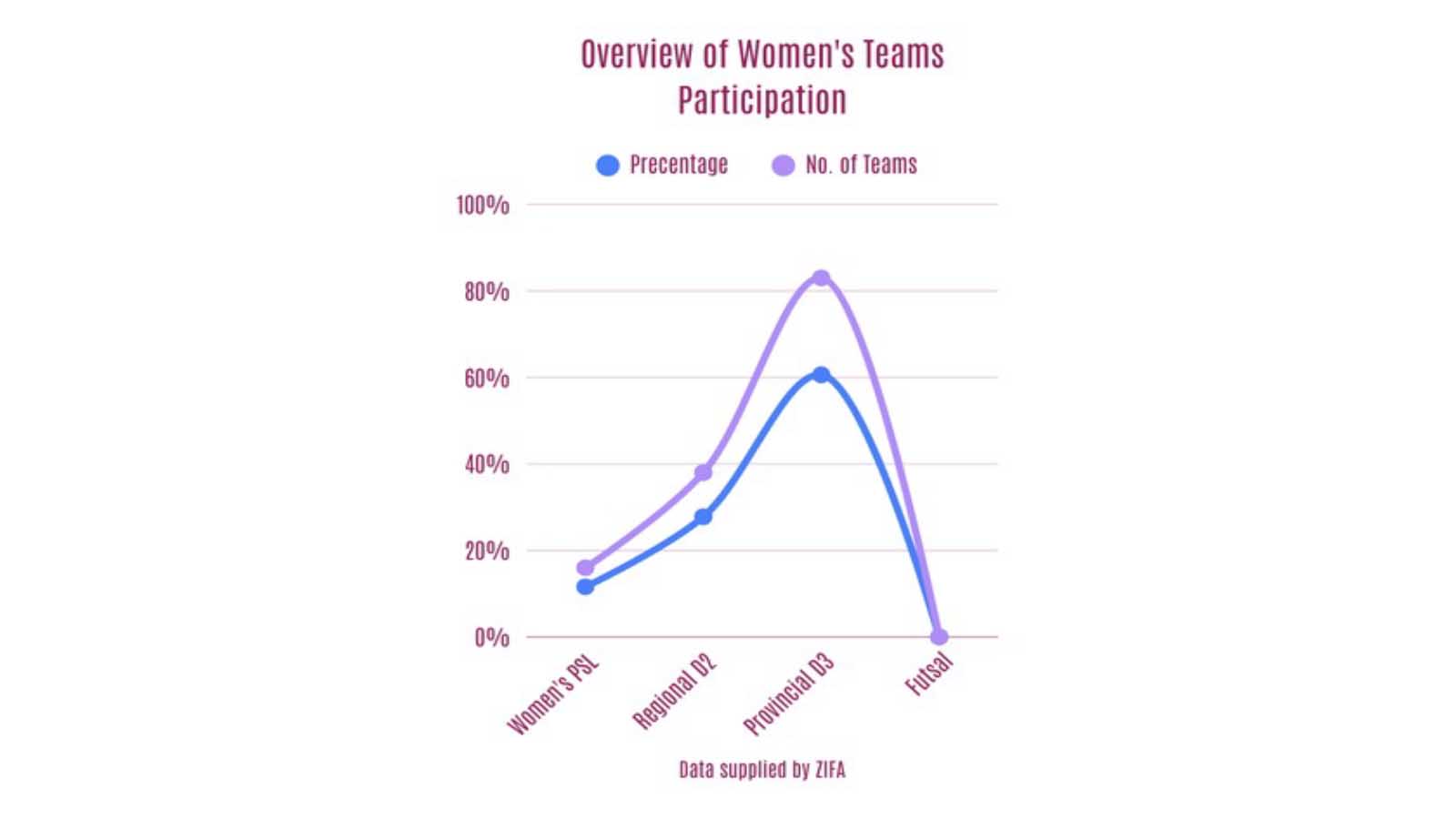
Of the 137 teams participating in the Munhumutapa Cup , 83 teams are in Division Three (provincial level), 32 teams compete in Division Two (regional leagues) and 16 teams are in the Women’s Premier Soccer League.
This structure shows increasing participation at entry level, but a narrow pipeline at the elite level.
Despite the disparities, the tournament has created opportunities that did not previously exist. Teams from rural and previously marginalised areas are now competing in organised structures, expanding the reach of the game and exposing new talent.
However, most of the teams are concentrated in urban setups. Most of the elite league football takes place in Harare and Bulawayo. Grassroots football is found in some provinces as well. Matabeleland North has more participation in the provincial Division 3 football, with 35 teams having registered for the Munhumutapa Cup.
Bulawayo has 26 teams in that Division 3 while Mashonaland West has 22 while the rest of the country is not represented. The two big cities dominate Regional Division 2 football leagues as well as the women’s topflight.
“There are more teams from these areas because of their urban setup which naturally has structures for women’s football development from the bottom. This is also because there is more investment in those areas compared to the rural,” said football analyst, George Deda.
Same tournament, different rewards
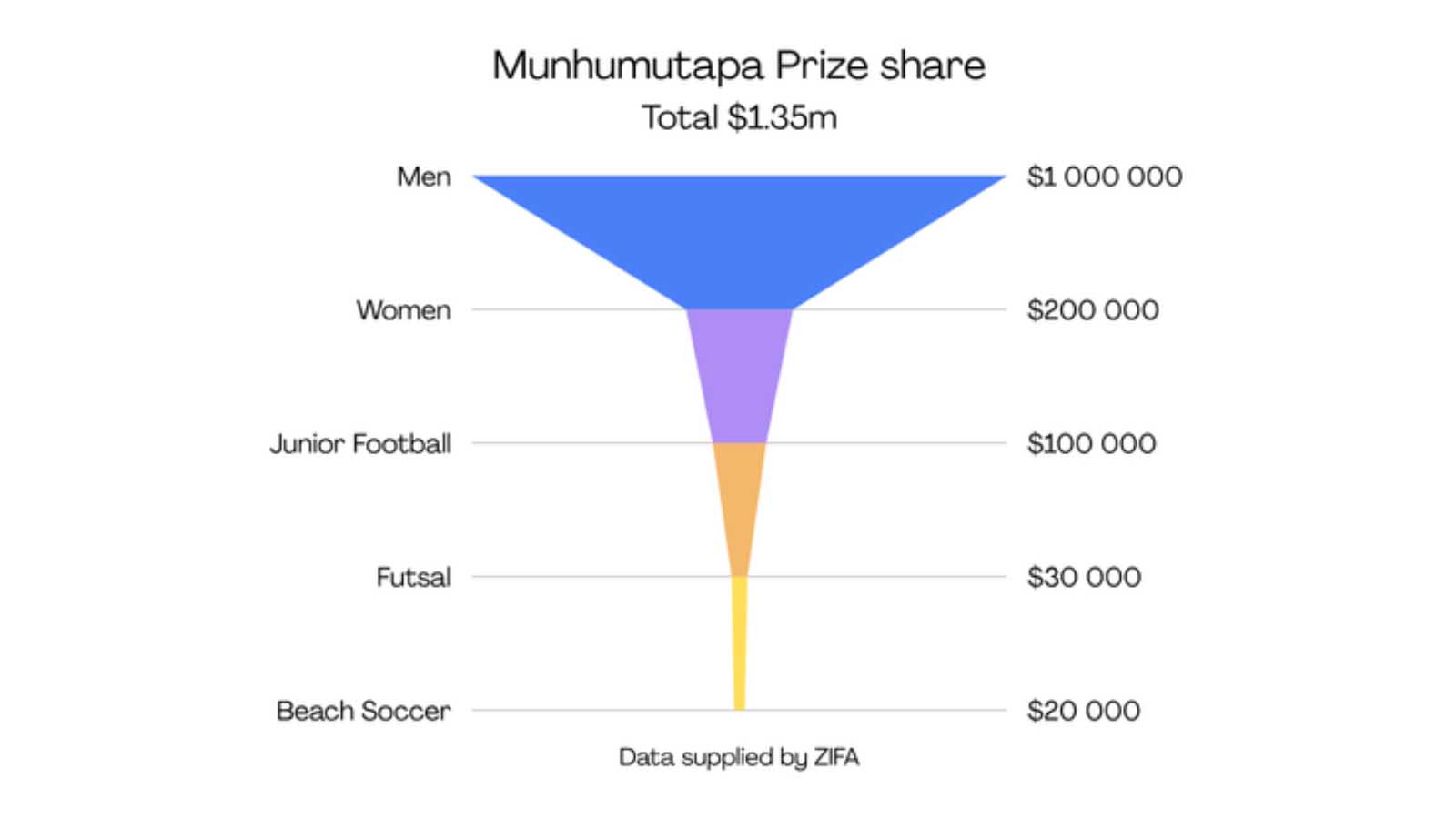
The financial variations in the Munhumutapa Cup are stark. The winners of the women’s competition will receive US$200 000, compared to US$1 million for the men’s champions, meaning women’s teams will earn just 20 percent of the men’s prize money.
The men’s prize has been justified by the organisers who pointed out that part of the earnings will go towards the costs of participating in the CAF Confederation Cup. The difference nonetheless reflects the vast financial chasm between men and women’s football.
Beyond participation
While Munhumutapa Cup provides the bridging step, the key question is whether it will translate into long-term transformation.
The tournament represents a significant step forward but the data suggests it is only an early one.
With women making up just a fraction of participants and earning significantly lower prize money, the gap remains wide.
For players like Chirambamuriwo, the Munhumutapa Cup offers hope and visibility. But until women enjoy the same opportunities, sponsorship and rewards as their male counterparts, the journey towards equality in Zimbabwean football remains unfinished. The game may finally be opening its doors to women but true equality is still a long way off.