Online Reporter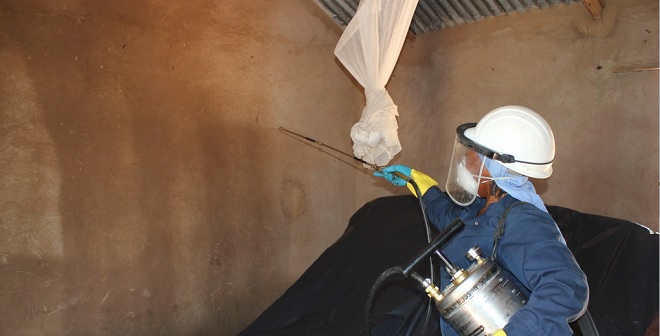
Tendai Gukutikwa
Health Reporter
MALARIA remains a growing threat in hotspot communities across Mutare District, with health officials stepping up prevention and elimination campaigns in vulnerable areas.
This was highlighted during a recent media engagement workshop on malaria control and prevention, organised by the Ministry of Health and Child Care in Mutare.
Officials called for stronger community awareness, early treatment seeking behaviour, and greater media involvement in the fight against the disease.
Speaking at the workshop, Mutare District Health Promotion Officer, Mrs Sophia Nezandonyi, said Zimbabwe is no longer focusing solely on controlling malaria but is now strategically moving towards eliminating it.
“Though there is now a strategic shift in malaria control and prevention throughout the nation, we are working towards elimination of the disease while sustaining high coverage of prevention measures to reduce infections, particularly in hotspot areas,” she said.
Mrs Nezandonyi said limited resources have forced health authorities to prioritise high risk communities where malaria cases remain most prevalent. “Because of resource limitations, we are now targeting areas that need interventions the most, particularly those with a high burden of malaria cases,” she explained.
She noted that prevention programmes such as Indoor Residual Spraying (IRS) and mosquito net distribution are largely directed towards vulnerable rural communities.
“IRS is mostly targeted to rural areas because communities there are more vulnerable and often disadvantaged. Even mosquito net distribution mainly targets rural populations because they are at greater risk,” she said.
However, Mrs Nezandonyi warned that climate change is worsening malaria risks in some communities by increasing mosquito breeding sites through heavy rains and flooding.
“As we carry out malaria control and prevention activities, we are also facing challenges such as climate related increases in mosquito breeding sites. When flooding occurs, breeding sites rise significantly, and vector control measures become more necessary. In 2026, we recorded an increase in malaria cases largely because of the rainy season,” she said.
Mrs Nezandonyi also said insecticide resistance is becoming another growing challenge affecting malaria control programmes.
“We also experience insecticide resistance in Indoor Residual Spraying programmes, and that is why we change the chemicals being used after every four to five years,” she said.
She said achieving malaria elimination requires continued collaboration between communities, health workers, Government, development partners and the media in promoting prevention awareness.
She also encouraged early treatment seeking behaviour.
She emphasised the critical role of the media in malaria awareness campaigns, saying journalists remain important partners in influencing public behaviour and disseminating life-saving information.
“The media engagement is a critical component of the national strategy because it shapes public perceptions and behaviour on health issues like malaria.
“The media is the fastest voice that can reach people anywhere and amplify our activities and health messages,” she said.
Also speaking during the workshop, Environmental Health Officer, Mr Paul Magomore, said malaria remains a major public health concern in hotspot areas such as Burma Valley, mining communities and border areas linked to Mozambique.
“There is a high risk of malaria in Burma Valley and nearby areas because of environmental conditions, and the constant movement of people,” he said.
Mr Magomore added that people travelling from low-risk areas into malaria-prone regions are vulnerable because they often have lower immunity against the disease.
“People coming from areas where there is little or no malaria risk usually do not have strong immunity compared to those already living in malaria-prone areas. They tend to contract malaria more easily,” he said.
He added that pregnant women and infants also remain among the most vulnerable groups due to weaker immune systems.
Mr Magomore explained that malaria is transmitted through bites from infected female anopheles mosquitoes, and can quickly become life-threatening if treatment is delayed.
“Malaria can develop into uncomplicated or severe malaria if not treated early. Common symptoms include fever, headaches, weakness and body pains,” he said.
He urged communities to seek treatment within 24 hours of developing symptoms, and encouraged people to get tested using rapid diagnostic kits available at health facilities and through community health workers.
“People must seek treatment early and get tested because delayed treatment increases the risk of severe complications and death,” he said.
Mr Magomore said Zimbabwe’s malaria control strategy relies heavily on surveillance systems, community-based interventions and vector control programmes.
“Our surveillance system is very strong and plays an important role in early detection and response. We also have village health workers who move around communities carrying testing kits and providing treatment for uncomplicated malaria cases,” he said.
He added that prevention measures remain critical in reducing malaria transmission.
“Prevention strategies include indoor residual spraying, use of insecticide-treated mosquito nets, destruction of mosquito breeding sites, environmental management, repellents and protective clothing,” he said.