admin
admin
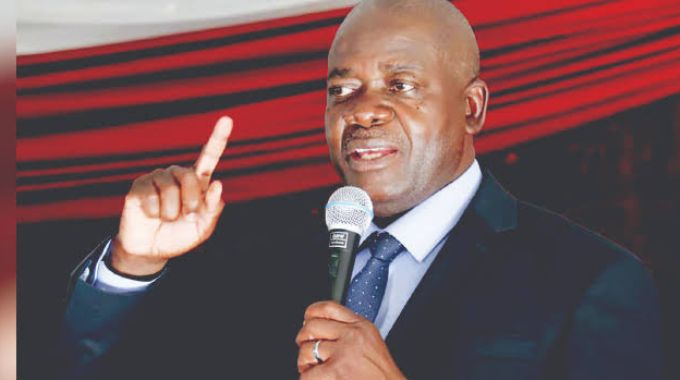
Cde Nhema, who is also Environment and Natural Resources Management Minister, gave local leaders, who include chiefs, headmen and district officers a greater mandate to spearhead the development in the constituency using funds from Constituency Development Fund (CDF).
Mr Fortune Matamba (23), from Musasa, said: “Our MP is doing well. He managed to electrify clinics and he has also done much to improve the standard of education in the district. Currently he wants to construct a tarred road from Chachacha to Tongogara. Generally he has done well and we will vote him back in the next election”.
Mbuya Gudo (78) said she has lived in Shurugwi for decades and applauded Cde Nhema for the development that he is spearheading in the constituency.
“Schools are nearby; we have a dam and a tarred road. This means that we are not facing transport problems where we have to travel a long distance to get transport. Our MP has done a lot. Whites used to suppress us, we had no electricity in the past but now we do,” she said.
She said villagers at Chachacha and Tongogara are using electricity for different ventures, which include welding. Cars are being maintained there as well, which shows that the availability of electricity empowered the people.
Mrs Tafadzwa Moyo thanked Zanu-PF and President Mugabe for supporting rural farmers.
“I would like to take this opportunity to thank President Mugabe for everything. He gives us seed and fertilisers each year. Our only problem is that the rain is not enough for our crops.
“Most of them wilted because of the inadequate rains last season. Some of us are not educated but we want self-help projects so that we can earn a living,” she said.
Mr Joraam Chimedza, the district administrator for Shurugwi said they were doing their best to develop the area with the little amount they got from the CDF.
“The CDF was not enough to do what we needed to do. It was just a drop in the ocean but we managed to achieve a couple of things,” he said.
They used some of the CDF money to construct Blair toilets at Boterekwa Primary School in Ward 18, which is a newly resettled area. Some of the funds were channelled towards revamping agriculture.
“We also managed to erect gardens in communal areas. The biggest garden is the Gokore Garden in Ward 14, which is under Chief Nhema. Six community gardens are in place. The focus is to increase food security so that we do not only rely on the rain which has proved unreliable,” he said.
Councillor Sheila Midzi of Ward 13 said her ward was empowered by various projects that include sewing, gardening and poultry.
“Our ward benefited from the CDF. Groups such as Zvamawanje, Dera and Udzana got sewing machines. These groups are expected to sew uniforms for schools, burial societies, soccer and netball teams,” she said.
Also contributing to constituency development is the Tongogara Community Share Ownership Trust being funded by Unki Mine since late last year. Development is taking place at a much faster pace now compared to the period before.
Hospitals and schools are being built and renovated while boreholes are also being sunk, among other projects, using the $10 million provided under the trust.
Headman Mapendere said more development needs to be done, particularly in newly-resettled areas.
“Our resettled areas are in need of better infrastructure and with the way things stand we will definitely be ranked the best constituency in the country,” he said.
In Dera area, teachers conduct lessons under trees. However, this would soon be addressed as work to build a proper school is under way.
“Children are learning under trees, but we addressed this issue long time back and it is only now that the school is being constructed.
“However, we need a clean and reliable water supply and farming implements since the farming season is approaching,” said Mr Tapfumaneyi Gamba from Dera.
Constituents in resettlement zones are in dire need of clean and safe water as some of them walk about 10km in search of it. Facilities for science education are also needed in these areas.
“We appreciate what our leaders are doing,” said a teacher, on condition he is not named.
“They are transparent and we are benefiting from the CDF and the community share ownership scheme. Our education has been bad due to poor infrastructure. We are used to teaching under trees and we are used to facing water problems. All these problems are a hindrance to good quality education,” said the teacher.
Although pupils have teachers, they lack other important resources such as books and information technologies.
Tongogara Community Share Ownership Trust is building schools especially in resettled areas where pupils are learning in farm houses or under trees. Musasa Primary School in Ward 18 is being constructed, a development that is expected to improve education standards in the district.
The road linking Chachacha and Tongogara, one of the busiest centres in Shurugwi, is in a bad state.
Villagers said the road has been closed on several occasions especially during the rainy season when it gets muddy. Instead of travelling 17km from Chachacha to Tongogara someone has to travel for about 30km as a longer route has been opened.
Some villagers also complained about the poor and distant health facilities in Shurugwi. As a result, many do not seek medical attention at all, while others do so in later stages of their illnesses.
A villager who preferred to be called Amai Tatenda said they go as far as Gweru if they need serious medical attention.
“Our clinic is Zvamabande. The clinic does not have enough medicines and sometimes we resort to traditional healers because we are given cotrimoxazole at the clinic.
“The other thing is that the clinic does not have a mortuary and an ambulance. We usually go to Shurugwi centre for medication and Gweru if the situation gets worse.
“The mortuary is being constructed through the use of community ownership share trust funds. We hope that we will soon have an ambulance,” she said.
Cde Nhema said he knows the challenges that some of his electors face. He said after drilling boreholes in parts of the constituency, attention would soon be on improving access to healthcare facilities.
“After implementing these projects we will be looking forward to venture into health and academic institutions. We have managed to deal with water problems as we have drilled more boreholes,” said Cde Nhema.


 Online Reporter