admin
admin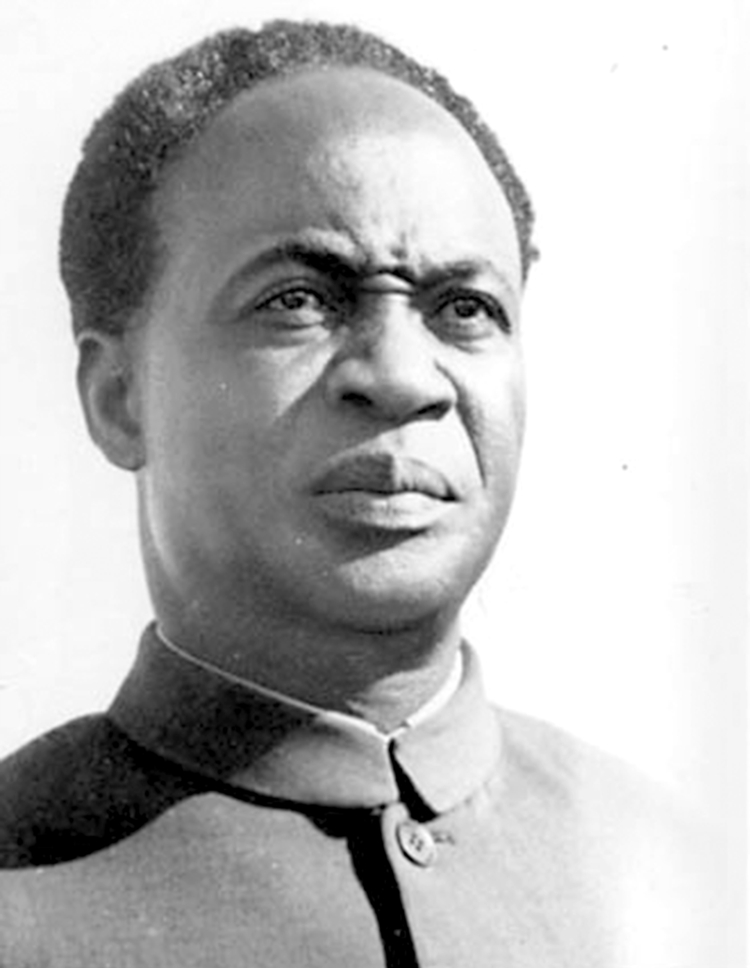
Rayban Otima Sengwayo
“What are the aspirations of Africans? Above all, they desire to regain their Independence and to live in peace. They desire to use the freedom to raise the standard of living of their people. They desire to use their freedom to create a Union of African states on the continent, and thus neutralise boundaries imposed by the imperial powers and promote unity of action in all fields. These are Africa’s ideals.“It has often been said that Africa is poor. What Nonsense! It is not Africa that is poor. It is the Africans who are impoverished by centuries of exploitation and domination.” – Kwame Nkrumah

This week we look at a great son of the soil. A teacher by profession and a powerful orator. When we speak of African Independence movements, we ignore the presence of Kwame. The whole of Africa was colonised, with Great Britain the most influential.
There was the famous saying, “The sun will never set on the British empire.” The Empire meant their colonial “possession of Africa”. To be exact, their influence was over Gambia, Sierra Leone, the Gold Coast, Nigeria, Cameroon, Libya, Egypt, Sudan, Eritrea, Somalia, Kenya, Uganda, Tanganyika (Tanzania), Northern Rhodesia (Zambia), Nyasaland (Malawi), Southern Rhodesia (Zimbabwe), Swaziland and South Africa.
Kwame Nkrumah, who is recognised as one of the most influential people of the 20th century, was a socialist and led Ghana to a bloodless journey to Independence.
In trying to unravel and unwrap this great statesman and Chief spokesperson for Africa in the 1960s, we visit the early developments of Ghana and the entry into the game of Kwame. But my key focus will be on his axioms, what made Kwame fight and love Africa so much.
The Gold Coast is a beautiful country and I urge my fellow Africans to visit Accra. It is rich in culture, beautiful scenery and great traditions.
My great memories were visiting Ghana on invitation to a youth conference. We carried gifts; that is two portraits – one of the Great Zimbabwe and the other of the majestic Victoria Falls.
We presented the first one to our Ambassador who was fantastic.
We had met her in Bulawayo when she visited our exhibition on Cde Robert Gabriel Mugabe titled, “Following the Footsteps of A Giant”, and recommended that we attend this symposium. On presentation of our gift (the Seventh Wonder of the World), everyone there was fascinated.
They exclaimed with excitement, “Have you been to the Kwame Nkrumah Museum? And do you know that your President is our son-in-law?”
They had compared Kwame Nkrumah to the falls. I found that very iconic and respectful. Do we look at our great statesmen in the same manner and accord them that honour when visitors come to our land? Where is our Robert Gabriel Mugabe Museum, our turning point in historical tourism?
Ghanaians were subjected to imperialism for over 50 years. One of the Governors was Sir Gorden Guggisberg who tried to develop the economy and introduce an education system that would take over the leadership of the country.
But Kwame says, “When I speak of African genius, I mean something different from negritude, something not apologetic, but dynamic.
“Negritude consists in a mere literary affectation and style, which piles up word upon word and image upon image with occasional reference to Africa and things African.
“I do not mean a vague brotherhood based on criterion of colour or on the idea that Africans have no reasoning but only a sensitivity. By the African genius, I mean something positive, our socialist conception of society, the efficiency and validity of our traditional statecraft, our highly developed code of morals, our hospitality and our purposeful energy.”
He was addressing students in Accra.
It is clear when he mentions African genius, our own President is a true example. At that time, Cde Mugabe was the last to leave Zapu and join Zanu formed in August. Africans are not prepared by imperialism, they are born and bred leaders through and through.
Sir Alan Burn brought a number of Ghanaians into the Civil Service, and this increased the burning desire of the African to attain Independence.
Born Francis Nwia Kofi Nkrumah in 1909 in a town called Nkroful in the Nzima region to a polygamist father, Kwame went to a missionary school and attended Government Training College (Achimota College) in Accra in 1926. He graduated as a teacher in 1930 and worked for five years in that profession.
In 1935, he decided he wanted to study abroad, looking towards Britain before moving to the US. He did his undergraduate studies at Lincoln University in Pennsylvania and completed his post-graduate at the same university before returning to Lincoln to teach.
It was during that period that his views on Pan-Africanism, African economy and African development were built. He spent his time there attending meetings and participating actively in African student organisations. His first call to leadership was in 1941 when he was elected president of the West African Students’ Association. In 1945, he left the US and went to the University of London.
It was here that the “art of colonial upstage” began.
His greatest achievement in London was organising the Final Pan-African Congress in Manchester in 1945, which was attended by George Padmore and Jomo Kenyatta.
He returned to Ghana in 1947.
“Africa is marching forward to freedom and no power on earth can halt her now. Only Africa can fight for its destiny. In this struggle, we shall not reject the assistance and support of our friends, but we will yield to no enemy, however strong.
“Africa wants her freedom, Africa must be free. It is a simple call, but it is also a signal lighting a red warning to those who would tend to ignore it.”
Kwame knew why he had to go to London. Only there would he submerge into the minds and hearts of his colonial masters, study their language, meet and engage with other Pan-Africanists and prepare himself by getting a good education.
He simply describes it thus, “Africa needs a new type of citizen, a dedicated, modest, honest, informed man. A man who submerges self in service to the nation and mankind. A man who abhors greed and detests vanity. A new type of man whose integrity is in his greatness.”
He knew Africa was ready. He was not alone in this cause. The ultimate was Gold Coast. Ethiopia and Liberia were the Independent countries at the time.
Kwame defines imperialism as,
“The fundamental cause of war; an iniquitous system which has generated intense rivalries and conflicts between nations that erupted into open warfare on a major scale in the scramble to secure ‘a place in the sun’ of colonial supremacy. It has today spawned the neo-colonialism, which is as busy as ever in creating clashes among the nations.
“Imperialism knows no law beyond its own interest and it is natural that despite the pretensions of its agents to justice and fair play, they always seek their interests first.”
In joining the United Gold Coast Convention (UGCC), he became its secretary general. He became popular among the masses. After a fallout with the UGCC leadership and a demotion to treasurer, he decided to branch away and form a new party in June 1949 – the Convention People’s Party.
On its formation he said,
“In all political struggles, there come rare moments, hard to distinguish, but fatal to let slip, when all must be set upon a hazard, and out of the simple man is ordained strength.
“The Convention People’s Party is Ghana. Our party not only provides Government, but it’s also the custodian, which stands guard over the welfare of the people.”
Cde Mugabe has strongly referred to this point as alluded by his peer, Nkrumah. In this instance, he says the revolutionary party, Zanu-PF deploys its members to Government to serve the people, but the party remains the foundation of the people, Zimbabweans.
This is clear in the Zim-Asset document.
There was extraordinary economic growth during Nkrumah’s years with the CPP government in the 1950s. He won two elections convincingly, gaining parliamentary majority. In 1956, escalating violence preceded the final election before Independence.
This included the bombing of his house.
His main challenger was Kofi Busia from the Ashantes, the largest ethnic group in Ghana. However, the CPP won convincingly. On August 3, 1956, Nkrumah moved a motion calling for Independence, which duly came on March 6, 1957.
He proudly announced,
“The Independence of Ghana was the first crack in the seemingly impregnable armour of imperialism in Africa. It created and furnished the bridgehead for organised assaults upon colonialists in Africa.
“Ghana is out of the gambling house of colonialism and will never return to it again.”
President Mugabe often says, “Zimbabwe will never be a colony again.”
These are visions of great African icons and revolutionaries who have fought colonisation and continue to preach the gospel of reconciliation among Africans.
In 1958, Cde Mugabe went to teach in Accra.
He arrived when Kwame had begun his tenure as leader of this newly-Independent country, hence his great regard for his peer, Nkrumah whose teachings have influenced a generation of African leaders.
Nkrumah was a Pan-Africanist and probably the most influential. During that period, Jomo Kenyatta – a prolific force in politics – was serving seven years in prison.
The All-African People’s Conference was held in Accra, organised by Nkrumah and his great colleague, George Padmore.
Dr Joshua Nkomo attended this event under the Southern Rhodesian African National Congress.
This event was to discuss African affairs as well as promote, support and encourage liberation movements.
Nkrumah says,
“Ghana’s Independence is meaningless unless it is linked up with the total liberation of Africa and with the projection of the African personality in the international community.”
African unity
Our freedom stands open to danger as long as the Independent states of Africa remain apart. Unity is the first requisite for destroying neo-colonialism. Primary and basic is the need for a union government.
Economic unity
Few would argue against the need for economic planning on a national scale. How much stronger is the argument for continental planning?
Education
Education consists not only in the sum of what a man knows, or the skill with which he can put this to his own advantage. In my view, a man’s education must also be measured in terms of the soundness of his judgment of people and things, and in his power to understand and appreciate the needs of his fellow men, and to be of service to them. The educated man should be so sensitive to the conditions around him that he makes it his chief endeavour to improve those conditions for the good of all.
Freedom
As long as a single foot of African soil remains under foreign domination, the world shall know no peace. Freedom is not a commodity which is “given” to the enslaved upon demand.
Industrialisation
There is absolutely no doubt that the key to significant industrialisation of this continent lies in a union of African states planning its development centrally and scientifically through a pattern of economic integration.
The people
There is one power which no force can overcome and that power is enthusiasm and determination of a whole people. Kwame Nkrumah, the great statesman, Pan-Africanist, died in exile. We choose to remember him for his great sacrifice to Africa and fight against imperialism.
On Africa Day we say, “Comrade Kwame Nkrumah, we salute you. Africa says, ‘Thank you, sithisiyabonga, tinotenda.’”Aluta continua
◆ Rayban Otima Sengwayo is a founding member and director of Friends of Joshua Trust, an organisation which preserves the history and legacy of Zimbabwe through the arts.



 Online Reporter