admin
admin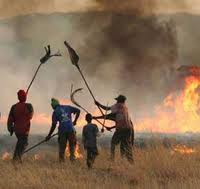
million kilogrammes of tobacco delivered to the auction floors.
Environment and Natural Resources Management Minister Francis Nhema made the revelations at the launch of the International Year of Forests in Svosve, Marondera last Friday.
The global theme for the International Year of Forests is “Forests for People”. Zimbabwe will commemorate this important year under the theme “Promoting Forests for People”.
The Forestry Commission organised the event that culminated in a tree planting field day at Chizeya homestead.
“This consumption does not, however, include the commercial use of firewood by flue-cured tobacco growers, hospitals, prisons, boarding schools and kiln-baked brick making. These activities cause accelerated deforestation and we need to focus on them as we commemorate the International Year of Forests,” said Minister Nhema.
ALSO SEE…
Firewood constitutes 49 percent of the total energy used in Zimbabwe, with over 90 percent of households depending on wood for energy.
Recent studies have shown that on average, a household in Zimbabwe uses approximately 7,7 cubic metres of wood per year for domestic purposes.
Minister Nhema added that a study by the Food and Agriculture Organisation in 2005 estimated the annual deforestation rate in Zimbabwe to be 312 900 ha, while the latest estimates indicate that deforestation had since escalated to 330 000 ha per year.
This, he said, was a result of an increased demand for wood energy in the wake of nationwide shortages of electricity, while some of the major causes of deforestation are land clearing for agriculture, land expansion and infrastructural development.
“Tree cutting for firewood for both domestic and industrial consumption, harvesting of timber for carving artifacts for both subsistence and commercial use and destruction of forests by veld fires are some of the major causes of deforestation in Zimbabwe,” said Minister Nhema.
He castigated villagers over clearing trees in designated livestock grazing areas and water catchment areas.
“This must stop and I challenge Chief Svosve and his traditional leaders to ensure that there is no more further forest degradation.
“Trees are an integral part of our farming system and are essential in our everyday lives. They also help control soil erosion, gully formation, soil desiccation and siltation of water bodies,” Minister Nhema further explained.
He added that his ministry was committed to ensuring that the nation got relevant information to sustain Zimbabwe’s agro-based economy, which included flue-cured tobacco production, among other economic activities.
Minister Nhema also challenged every household nationally to plant 10 trees per year, with kraalheads expected to plant 50 trees while all headmen planted 100 trees with chiefs on the other hand expected to plant 200 trees each as a way of emphasising the importance of re-afforestation.
Zimbabwe commemorates National Tree Planting Day on the first Saturday of December each year as a counter strategy to deforestation. This year’s tree of the year is Kigelia Africana commonly known as the Sausage tree in English, Mumvee/Mubvee in Shona and Umvebe in Ndebele.


 Online Reporter