admin
admin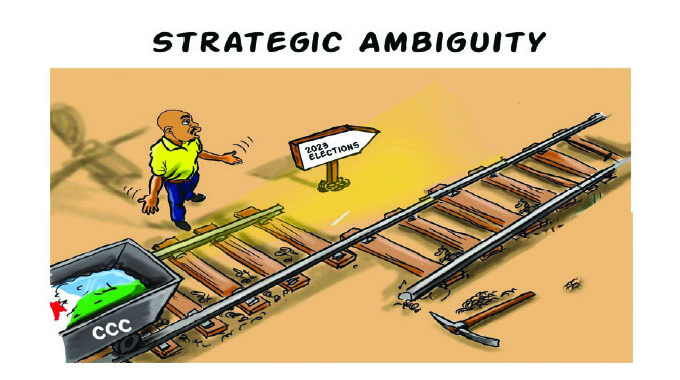
Innocent Mujeri-Correspondent
The recent ruling by Bulawayo High Court Judge, Justice Bongani Ndlovu, barring 12 CCC candidates from participating in the forthcoming National Assembly elections on grounds of late submission of nomination papers has sparked a flurry of heated debate.
Instead of introspecting and taking responsibility for their mishaps, the CCC has chosen to point fingers and unjustifiably lay blame at the feet of President Mnangagwa and Zanu PF.
This blame game is not only unmerited, but misleading and far removed from the reality of the situation.
The truth is simple and clear, CCC, because of their self-imposed “strategic ambiguity”, opted to submit their nomination papers at the eleventh hour, in contravention of established rules and timelines.
This tardiness and disorganisation is a fault of their own making.
The nomination date was announced well in advance and all political parties, including the CCC, had adequate time to put their house in order and file their papers.
There was no need to wait for the final day, June 21, to carry out this crucial task.
Instead of owning up to their mismanagement and logistical shortfalls, the CCC has chosen to throw the blame on President Mnangagwa, accusing him of employing “lawfare” against them.
This claim is devoid of substance and logic. President Mnangagwa is not the individual who instructed CCC to delay their submissions. The notion that he has somehow manipulated the system against them is both ludicrous and offensive.
Recent revelations on social media further expose the disarray within the ranks of CCC. Professor Jonathan Moyo, a prominent political analyst, posted on his Twitter account on July 29, highlighting the misrepresentation being peddled by the CCC.
Contrary to the party’s audacious claim that all of its 12 parliamentary candidates submitted their nomination papers before the Bulawayo Nomination Court closed, evidence paints a different story.
According to Prof Moyo, one of the candidates, Gift Ostallos Siziba – a close confidante of Advocate Nelson Chamisa – was caught on camera in Harare when the Nomination Court in Bulawayo closed at 4pm.
This brazen contradiction shows that the CCC’s claims are not grounded in truth, but rather in a desperate bid to shift blame and evade responsibility for their failure to meet basic electoral obligations.
Clearly, and inexplicably, Ostallos Siziba found himself outside the wrong court in Harare, when he should have been at the Nomination Court in Bulawayo.
This glaring oversight not only undermines the credibility of the CCC’s claims, but also paints a vivid picture of a political entity caught up in a whirlwind of disorganisation and confusion.
This scenario also raises important questions about the party’s decision-making processes and its strategy.
How could they entrust their electoral process, a crucial element of their political journey, to novices in politics?
The failure to properly guide and advise such a key candidate reflects poorly on the party’s internal structures and leadership.
It demonstrates a lack of co-ordination, foresight, and strategy within the party, which can be detrimental to its overall political mission.
Moreover, it is crucial to remember that President Mnangagwa has not taken anyone to court over this matter.
To hold him accountable for something he has not done not only reeks of political desperation, but is profoundly wrong and unethical. It is a crude and unfair attempt to tarnish his image and that of his party, Zanu PF.
As a political party made up predominantly of lawyers, the CCC should be familiar with Prof Lovemore Madhuku’s wisdom in his seminal book “An Introduction to Zimbabwean Law”.
He asserts, “Law is law, regardless of its moral content. Law is law, regardless of whether it is just or unjust.”
This principle underscores the essentiality of adhering to the rule of law, even if one perceives it as unjust.
The law exists to ensure fairness, equity, and order, and all who fail to abide by its stipulations must face the consequences, regardless of their political affiliation or status.
The CCC and its supporters, who are eager to lay blame on President Mnangagwa for their own shortcomings, should heed his advice – they should “go and recover their school fees” from their educational institutions.
It appears they have misunderstood the operations of the law and the courts.
Government does not interfere with the workings of the Judiciary, a fundamental tenet of the principle of separation of powers.
Those asserting that Government has had a hand in recent court rulings barring some opposition candidates from contesting in the elections are displaying a disturbing ignorance.
If the CCC’s disqualified aspirants seek someone to blame for their unfortunate situation, their gaze should turn inward to their own party’s leadership, specifically Nelson Chamisa.
It was his decision to centralise power and hold off until the last moment to announce the names of successful candidates that contributed to the current chaos.
If the candidates had been aware earlier that they were selected, the current turmoil could have been easily avoided.
The CCC’s disorganisation, failure by Chamisa to devolve power, and the lack of a sound political strategy within the party has led to its suffering in Bulawayo.
This debacle reveals a gap between the image that the CCC leaders project, as being well-versed in the law, and the reality of their understanding.
This mishap should serve as a stark reminder that being in the opposition does not absolve one from the dictates of the law. The law must be respected and followed, regardless of personal feelings or political beliefs.
It is high time that the CCC takes full responsibility for its own actions and stops blaming President Mnangagwa and Zanu PF for its own blunders.
Playing the victim card will not solve their problems. Instead, the CCC should use this as a learning curve to introspect, reorganise, and strategise better for future elections.
The path to a thriving democracy is through adherence to the rule of law, not through baseless accusations and blame games.
The CCC’s series of missteps and the attempt to shift the blame onto President Mnangagwa and the Zanu PF, serves as a disservice to the democratic process.
It is vital for the party to acknowledge its shortcomings, correct them, and move forward with the best interests of the people at heart.
Rather than blaming others for their own missteps, the CCC needs to focus on providing effective and credible opposition, based on substance, strategy, and adherence to the rule of law.
Only then will they prove themselves worthy of the electorate’s trust.



 Online Reporter