Chronicle Editor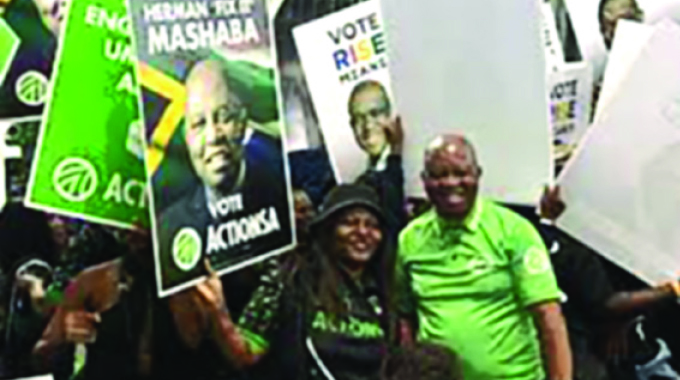
Marshall Ndlela, [email protected]
THE highly anticipated votes for Action SA in the recent South African elections turned out to be nothing more than a dream for Herman Mashaba and his party, as they received far fewer votes than expected, falling way below the five percent mark. This unexpected outcome has left Mashaba and his supporters greatly disappointed.
Mashaba had positioned himself as a potential kingmaker in this election, making it clear that he would not work with the ANC in the event of a coalition government. He proudly identified himself as a capitalist, advocating for capitalist policies, including the abolition of BEE policies and a commitment to do away with land expropriation. Mashaba and his party staunchly stood for capitalist or free trade policies.
However, during his tenure as the Mayor of Johannesburg, Mashaba made a significant socialist move by doing away with outsourcing security guards and making them full-time local government employees, as per the wishes of the EFF, who were sleeping partners in the coalition agreement that allowed Mashaba to assume the mayoral position. This inconsistency raises questions about Mashaba’s political ideology and his lack of political schooling.
Mashaba’s opportunism becomes apparent when examining the unclear source of capital for his hair product business, which he claims made him a multi-millionaire. While he insists that his business started in Garankuwa, his birthplace, questions arise regarding his true patriotism as he chose to represent Johannesburg, a place to which he has no natural ties. Additionally, on the day of the election, while other leaders chose to vote in their respective home locations, Mashaba voted in Sandton, further highlighting his disconnection from his place of birth and his African roots.
Adding to the concerns about Mashaba’s character is the fact that he was busy building his hair product business while his peers were fighting for the liberation and freedom of South Africa against apartheid. Furthermore, allegations that he sourced funds from apartheid elements raise serious doubts about his moral compass and integrity.
Mashaba’s animosity towards fellow black Africans is troubling, indicating a deep-rooted self-hate that is reminiscent of the story of Cain and Abel. His statements and speeches demonstrate a sense of Trumpism and a willingness to sow societal divisions for personal gain. His recent debate with Dr Mbuyiseni Ndlozi exposed his weakness in the face of monopoly capital, as he belittled the struggles of blacks in their fight for economic empowerment, reducing their aspirations to mere spaza shops, salons, and vendor desks instead of addressing the critical issues of land and mineral resources.
The election results clearly reflect a rejection of Mashaba’s Trumpism and opportunistic gains. As results were displayed on the IEC dashboard, Mashaba watched with devastation as the electorate disapproved of him and his party, favouring the MK party and Gayton Mackenzie’s coloured-inspired party.
Furthermore, Mashaba’s claims about fighting corruption seem dubious in light of his involvement in purchasing an autobiography written by Prince Mashele. He attempted to deceive the public by falsely claiming it was “unauthorised,” while making payments to the author. This corruption raises serious concerns about Mashaba’s moral stature and his commitment to transparency.
In a surprising move, Mashaba has refused to honour the obligation of those who voted for him, suggesting that he will send other members of his party to parliament while focusing on growing the party himself. However, his refusal to enter into any form of coalition, including with his own Moonpact shot alliance, raises questions about his ability to grow the party. This selfish approach is akin to Trumpism and showcases a toxic aging character that has no place in modern politics.
In conclusion, the politics of self-hate, Trumpism, and opportunism have dealt a severe blow to Mashaba and his Action SA party. With a clear rejection by the electorate, Mashaba’s lack of ideological consistency, questionable character, and divisive rhetoric have proven detrimental to his political career and the growth of his party. It is now up to the South African people to determine the path forward for their nation, free from the toxic influence of figures like Mashaba.
λ Marshall Rufura Ndlela is a renowned academic and economist. He can be contacted at [email protected]



 Online Reporter