Online Reporter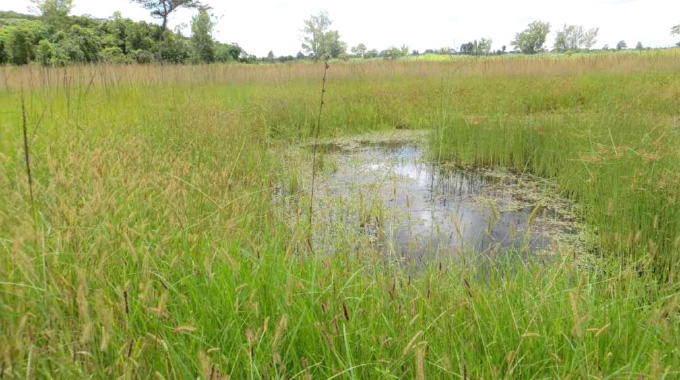
Nqobile Bhebhe, Features Writer
AS Zimbabwe joins the global community in commemorating World Wetlands Day tomorrow, this year’s observance carries special significance as the country holds the Presidency of the Fifteenth Conference of the Contracting Parties to the Convention on Wetlands (COP15), a position that places Zimbabwe at the forefront of global wetland conservation efforts at a time when these critical ecosystems face mounting pressure.
The day marks the adoption of the Convention on Wetlands in 1971 in Ramsar, Iran and has become a key moment to reflect on the role of wetlands in sustaining life, water security and climate resilience.
Zimbabwe stepped into the role after hosting the high-level conference in Victoria Falls last year. As the COP15 President, Zimbabwe has committed to restore 250 000 hectares of degraded wetlands and designating five new Ramsar Sites by 2030.
The ambitious restoration target demonstrates alignment with global climate resilience, biodiversity protection and sustainable development goals, placing Zimbabwe among proactive nations taking measurable action to safeguard fragile ecosystems.
Wetlands play a critical role in water security, carbon storage and disaster risk reduction, making their protection a key global priority. By expanding Ramsar-designated sites, Zimbabwe enhances protection of ecologically significant areas while attracting international partnerships, technical support and green financing.
The pledge reinforces the country’s commitment to environmental stewardship, elevating its profile as a responsible custodian of natural resources on the world stage.
“This position was assumed during the prestigious conference that was hosted in Victoria Falls last year,” said Minister of Environment, Climate and Wildlife Dr Evelyn Ndlovu as she reflected on the day.
She noted that wetlands are among the world’s most threatened ecosystems, disappearing three times faster than forests, with the Global Wetland Outlook for 2025 warning that up to 20 percent of remaining wetlands may be lost by 2050 without urgent intervention.
“In Zimbabwe, although wetlands cover a substantial portion of our landscape, only 17,63 percent remain pristine, while the rest face moderate to severe degradation. The increasing flash floods in our urban areas are a direct consequence of wetland loss. Wetlands act as natural sponges, absorbing excess water, recharging groundwater and regulating floods.
“When they are built upon or degraded, communities become vulnerable. I urge all citizens to refrain from constructing on wetlands and to respect the ecological and legal protections in place,” she noted.
Wetlands — including marshes, swamps, dambos, floodplains and vleis — are increasingly being recognised not as wastelands but as critical natural infrastructure underpinning biodiversity, livelihoods and national resilience.
Government has established a comprehensive policy framework to safeguard these ecosystems, including the Environmental Management Act (CAP 20:27), the National Wetlands Policy, the Wetlands Masterplan and detailed management guidelines to guide sustainable use across sectors.
This year’s global theme, “Wetlands and Traditional Knowledge: Celebrating Cultural Heritage,” resonates strongly with Zimbabwe, where communities have long regarded wetlands as sacred and life-giving spaces.
“Long before scientific classifications, our communities understood wetlands as matoro, mapani, zvitubu, masensa, and amaxhaphozi; sacred life-giving spaces governed by cultural norms and traditional leadership.
“Across the country, communities continue to demonstrate the power of indigenous knowledge in wetland protection. Examples include Ditchwe Wetland Forest in Makonde, Ntunjambila and Gulathi Wetlands in Matobo, and traditional water-harvesting initiatives in Mazvihwa, Zvishavane.
These community-led efforts show that cultural values remain a powerful tool for ecological restoration,” said Dr Ndlovu.
Under the National Development Strategy One (NDS1) and through the Environmental Management Agency (EMA), Government has supported 92 community-led wetland restoration projects, covering 31 082 hectares.
These initiatives are improving ecosystems while supporting livelihoods such as farming, fisheries, beekeeping and water harvesting. Dr Ndlovu said traditional leaders have played an indispensable custodial role in these gains.
“As the COP15 President, Zimbabwe has committed to restore 250 000 hectares of degraded wetlands and designating five new Ramsar Sites by 2030. Achieving this requires collective action from all sectors — Government, private sector, civil society and communities.”
Environmental experts say wetlands are natural water treatment systems.
As water flows through wetland vegetation and soils, pollutants including sediments and nutrients are filtered out.
“Wetlands improve water quality by trapping pollutants before they reach rivers, dams and underground water sources. Destroying them means we are removing one of nature’s most efficient and cost-effective purification systems,” Mr Arnold Maphosa, an environmental expert said.
He said this function is especially crucial for urban areas where wetlands protect downstream water bodies that supply towns and cities.
With climate change bringing more intense rainfall events, wetlands are also critical in reducing disaster risks.
“When they are drained, built on or compacted, that natural sponge effect is lost, leading to flash floods that damage homes, infrastructure and crops. Recent flooding incidents in parts of the country have reignited debate on land-use planning, with authorities pointing to wetland encroachment as a major contributing factor,” he added.
Zimbabwe’s wetlands are biodiversity hotspots, providing habitat for migratory birds, fish, amphibians and unique plant species. Conservationists warn that degradation threatens ecological balance and food systems.
“Wetlands are nurseries for many species. If we lose them, we lose breeding grounds, feeding areas and shelter for countless organisms,” said a local conservationist, Ms Siphosakhe Makhalima.
She said wetlands are also vital in climate regulation, as their soils store large amounts of carbon.
“Protecting wetlands is part of climate action. They help us both adapt to and mitigate climate change,” the expert added.
Beyond ecological services, wetlands support community livelihoods through fishing, small-scale farming, grazing and harvesting of natural materials.
“Communities depend on wetlands for food and income, but these activities must be managed to ensure the ecosystems are not permanently damaged,” Ms Makhalima added.
Wetlands also replenish underground water sources by allowing slow seepage into the ground, sustaining boreholes and wells during dry periods.
Their destruction can lead to falling water tables, affecting both rural and urban supplies.
EMA has warned that illegal developments on wetlands will attract penalties, including fines and demolition orders, while awareness campaigns are being intensified to change perceptions that wetlands are idle land for construction.
“Wetlands are not just patches of waterlogged land, they are life-support systems. Protecting them is protecting our future,” he said.
As pressure from urban expansion, agriculture and climate change grows, Zimbabwe’s renewed wetlands preservation drive — anchored under NDS1 and its COP15 leadership — is being seen as central to safeguarding water security, biodiversity and sustainable development for generations to come.
The national commemoration of the World Wetlands Day 2026 are scheduled for Ditchwe Wetland Forest in Makonde District.
Provinces and districts will also hold their own commemorations under the leadership of Provincial Ministers and District Development Co-ordinators.