admin
admin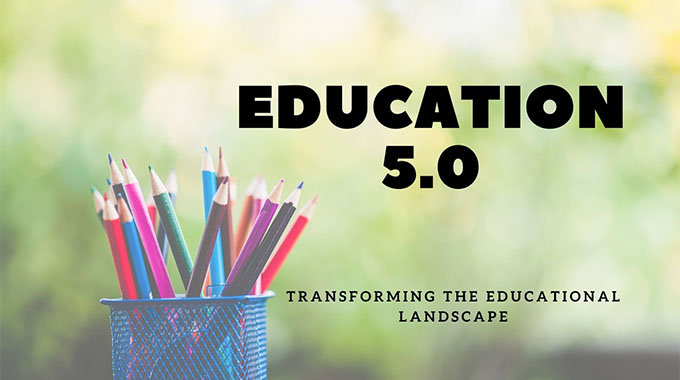
Tongai Dana-Correspondent
Colonial education systems proved inadequate and inappropriate for the economic and social development of the post-colonial state, hence not appropriate when it comes to meeting the needs of Africans and indeed of Zimbabweans.
To decolonise the education system and enhance the use of local resources to bring solutions to local challenges and also contribute to global development, African governments have made efforts to reform education systems.
In Zimbabwe a number of reforms were made to ensure universal access to quality education and inclusive education.
A number of new universities were constructed that as at 2013 Zimbabwe boasted of having over a dozen state universities, a good number of polytechnics and vocational training centres and colleges.
However, these achievements did not pay much dividends in terms of bringing self-reliance as the country continued to import many things.
The country had many graduates who would struggle for opportunities to be innovative with their attained knowledge and skills for the country’s industrialisation and economic development.
Fortunately, the coming of the Second Republic under the leadership of President Mnangagwa has seen what seemed impossible becoming a possibility by ensuring that the education system produces practical goods and services.
Through the Ministry of Higher and Tertiary Education, Science and Technology Development, Zimbabwe has championed the implementation of the 5.0 education philosophy which brings in the aspect of industrialisation, technology and innovation to the country’s education system.
Education 5.0 emphasises the rejuvenation of the science and technology sector to meet innovation and industrialisation demands through teaching and research methods that expose learners to creative thinking to nurture and enhance the much required creative and innovative abilities within their distinctive fields of study hence produce critical and innovative graduates for industrialisation.
Under the Education 5.0 philosophy, Zimbabwe has made miraculous achievements that have reduced the country’s import budget and increased the country’s foreign currency earnings by boosting exports.
Zimbabwe is now locally producing some of the goods the country used to import in State universities, polytechnics and other government training institutions.
The Ministry formulated and adopted investments in infrastructural development projects to allow effective research for generation of new knowledge to enable the hatching and nurturing of innovative.
Industrial life changing ideas and inventions were made.
It is on this basis that when Zimbabweans count their blessings, they should count President Mnangagwa’s Second Republic.
In Manicaland, the Ministry of Higher and Tertiary Education constructed, equipped and operationalised an agro-industrial park at Manicaland State University of Applied Sciences and a Baobab Juice beneficiation plant at the Mutare Teachers College.
These two projects have created employment for students, lecturers and local communities in Manicaland.
The agro-industrial park project will increase production through the utilisation of smart agricultural technology, precision agriculture and value addition and beneficiation of agricultural produce.
Currently, 265 hectares have been put under tobacco and centre pivots were procured and installed at the Industrial Park.
The Baobab Juice beneficiation plant will see the dream of value addition and beneficiation of locally available indigenous fruits being realised.
High-tech industrial plant for the production of juices from locally available fruits such as Baobab is currently being installed at the plant.
For Mashonaland Central and Mashonaland East, the Second Republic through the Ministry of Higher and Tertiary Education has developed the Masawu Agro-Industrial Park at Bindura University of Science Education.
The project will see an increase of Masawu harvesting, processing and value addition.
The value addition and beneficiation of Masawu produce shall be undertaken to improve productivity and create employment in the provinces.
Drawing from the heritage based education under which a country uses local resources to meet local demands the project will see the value addition and beneficiation of local agricultural produce to produce cereals, grain bran, livestock and wildlife feed-stock.
In Masvingo, the Chivi Innovation Centre for Dry-Land Agriculture Agro-Industrial Park will have a development impact on the local communities as it promotes research on traditional grains.
Zimbabweans and indeed the people of Masvingo will enjoy direct employment and associated indigenous fruit and agricultural value chains from these projects.
The Second Republic also boasts of the establishment of the Reverse Engineering of New Mapfura Pulpers project for Mwenezi Plant which done by Masvingo Polytechnic.
In Midlands province, the Modified Coal Tar Project by Midlands State University in Zvishavane has benefited the local community through employment along the value chain.
The coal tar surfacing project will reduce the road surfacing cost while also improving the quality of road construction in Zimbabwe.
The Second Republic is at advanced stages of construction of the PITSCOTTE Livestock and Wildlife Conservancy by Midlands State University.
The conservancy project will see the improvement of eco-tourism, livestock breeds and wildlife conservatory in Midlands province.
An Industrial Park was also established at MSU and it houses the university’s clothing and textile enterprise, and chemical manufacturing plant. The park has created employment and associated value chains for local communities.
In Matabeleland South, a number of projects ranging from infrastructural developments in existing educational institutions and establishments of new human development and training centres have been established.
The Second Republic through the responsible ministry established the Plumtree Industrial Training College to introduce training in various industrial technical and vocational education for the surrounding communities.
This project is key because the Plumtree community had no training and vocational education institution since independence.
A Mining Laboratory and Innovation Complex at Gwanda State University was also constructed.
This project will facilitate mining innovation and engineering in the province and the country at large through targeted analysis of ore or mining, beneficiation and subsequent resource exploration which shall greatly assist both artisanal miners as well as established mining firms in the surrounding communities.
In Matabeleland North, a Dryland Agro-Innovation Park was established at Lupane State University.
The project is will spur innovation in semi-arid agriculture, wildlife management, forestry and rural development while also propping knowledge and technology driven industries for the benefit of the province and Zimbabweans in general.
The Dryland Agro-Innovation and Industrialisation Park is a timely investment to solve agriculture related challenges in the country’s arid regions.
The investment will see the improvement of the economic fortunes of people in Matabeleland who will now have to move away from subsistence to agro-entrepreneurship producing for both local and export markets.
Binga Industrial Training College offers training in various industrial technical and vocational education including tourism and hospitality trades which is important for Binga, a naturally rich and scenic region yet it stands under developed.
This bears testimony to the fact that President Mnangagwa will leave no place behind.
In Harare and Bulawayo, the Second Republic has invested in innovation hubs and industrial parks as vehicles for technology assimilation, adaptation, customisation and diffusion in Zimbabwean society; primarily for the benefit of industry, commerce and the communities.
In Bulawayo, an innovation hub was constructed at the National University of Science and Technology (NUST). In Harare, a Science Park was established at Harare Institute of Technology University to develop, incubate, transfer and commercialise technology for rapid national industrialisation.
This has promoted and encouraged active collaboration between the private and public-sector technology development initiatives, attracting international technology focused companies and research organisations to locate their operations to Zimbabwe hence stimulating job creation through enterprise creation and fostering Foreign Direct Investment (FDI).
In Mashonaland West, the Second Republic through the MHTESTD has invested in the establishment of an Innovation hub at Chinhoyi University of Technology (CUT).
This has facilitated the transfer of technologies and products of basic knowledge and applied research generated at CUT into commercially viable products through working with university researchers and industry for viable commercialisation.
CUT has rolled out some cattle artificial insemination programme and is set to become the largest cattle breeder in the country supporting communities involved in livestock production. This has seen President Mnangagwa’s vision of resuscitating the depleted national cattle herd for improved beef quality and milk production becoming a reality. At this pace, becoming an upper middle income state by 2030 is a reality.



 Online Reporter