admin
admin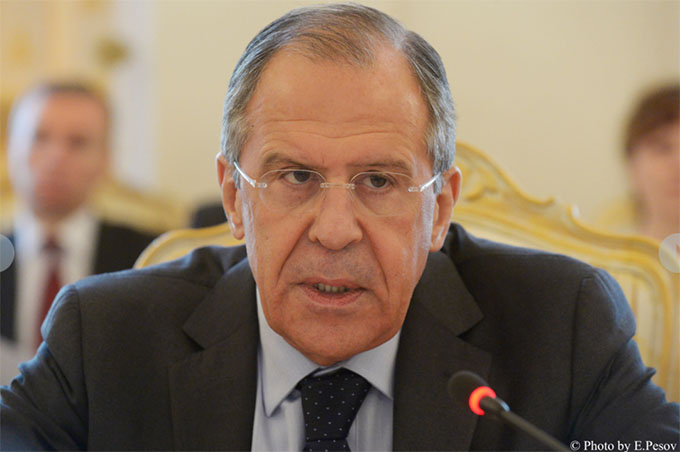
Gibson Nyikadzino Correspondent
EVENTS happening in the world should not be read in isolation. They are a bigger picture of minute details, the macrocosm of a microcosm.
The packaging of reality surrounding global social, economic and political issues have either a positive or negative impact on the psyche of many people who embrace all information as fact.
It is always important to question the intentions of how opinion leaders interpret these events to embrace or disagree with their views while presenting alternatives from the intellectual armoury.
There are nasty events in eastern Europe, the Middle-East and South East Asia being provoked by the United States government.
Since February, Russia’s special military operation in Ukraine has been packaged in the West’s corporate media as an act of aggression. This happened as the West has vindicated its eastern aggression towards Russia by expanding NATO’s military presence in Ukraine, threatening Russia’s security and national interests.
At first, many countries and individuals were tempted to believe the Western narrative as some were used by the US to condemn Russia.
As the dust settled and reality dawned, many global citizens are realising they were tricked into believing the Western capitalist narrative.
The US and Europe have both failed in their objectives against Russia. Similarly, their failure has also been apparent in Zimbabwe since 1999, a position this writer will qualify.
This is a mind-blowing issue whose explanations further help understand the goings on in Ukraine, what is happening in Syria and what is going on with the Iran nuclear deal.
All these are all connected.
Destabilising Syria
The US geological survey in 2010 announced that there was a 122 trillion cubic feet of undiscovered, recoverable natural gas in the Levant basin, where Syria, Lebanon and Palestine converge in extensions.
In view of this, Western oligarchs coveted the gas discoveries and wanted to push for the construction of a pipeline from the Levant to Turkey and then Europe, but that proved expensive. Also, that was too impractical.
However, the intentions of these oligarchs through the backing of their governments were to use the natural gas in the Levant basin as an alternative for Europe to undercut Russia’s market share.
Unfortunately for them Syria’s President Bashar al-Assad refused and insisted that the gas had to be moved to Europe with a pipeline passing through his country.
To them that was the redline and that is what brought Syria to what it is today. It is important to highlight that oil and natural gas are the world’s most valuable traded resources and probably the most conflict-prone.
This explains why the industry’s major players, including Exxon, Shell, Total, and Lukoil, constantly scour the globe for new reserves, frequently inciting wars and civil unrest in the process as they compete (with assistance from their respective governments) for control of the enormously lucrative fields.
On that idea, the conflict happening in Mozambique’s Cabo Delgado province is not an accident. There are rich gas fields which the French are interested in through their company, Total. Natural resources are frequently at the centre of inter-state conflicts. Oilfields and mineral lodes are extremely lucrative, and large mining and resource firms like ExxonMobil, Total and Shell compete for control of them.
Creating a pariah state
The US pulled out of the Joint Comprehensive Plan of Action (JCPA), also known as the “Iran nuclear deal” in May 2018. Donald Trump, then President, said pulling out of the Iran nuclear deal was sending a message that “the United States no longer makes empty threats.”
Trump pulled out of the JCPA not to send a message that his country was no longer making empty threats but wanted to help the Israeli government curtail the growing Iranian influence in the Middle-East hence Israel has made new alliances with countries like the UAE and Bahrain under the Abraham Accords brokered by President Trump.
Furthermore, Morocco then re-established relations with Israel under a separate Trump-brokered agreement.
The withdrawal from the deal by the US was to its benefit and make Iran a regional and global pariah.
Today, the Joe Biden administration is also working hard to stall the nuclear deal as much as possible because the US and Israel do not want Iran to be accepted by the global community because of its influence.
They do not want Iran to get contracts to sell its gas and oil, even though the world desperately needs it to drive the commodities’ prices down.
Russia the enemy
There is an interlink between how the West treated and still treat Syria and Iran, and how they are antagonising Russia, too.
Before invading Syria through funding terrorists and stealing its oil, Western countries wanted the construction of a gas pipeline from the Levant basin to Europe via Turkey to undercut Russia’s share, and when Syria said “no” they punished it.
The same countries started stirring things up in Ukraine so that they could intimidate and antagonise Russia using a NATO-inclined country on its border or at least a NATO partner because the US and her European allies are today training Ukrainian neo-Nazi troops to NATO standards.
All they wanted and still want to do is to exert control over the areas that the Russian gas pipelines pass in Ukraine. But Russia has been anticipating this since the 2014 when a Western-backed coup overthrew former Ukrainian president Viktor Yanukovich.
Like what the West has done to Iran and Syria, labelling them as pariah states, the same is what they want to be done on Russia, and to another extent, China if possible.
But Russia is not an enemy of the progressive world. It is only signalling how the future world can be made better by adopting multilateralism over unilateralism; co-operation over domination and peace over war.
The receptions given to Russia’s Foreign Affairs Minister Sergey Lavrov and the US Secretary of State Antony Blinken in their recent visits to African countries indicate how Africa is beginning to see how treacherous capitalism is and how detrimental it is for the future.
Little Zimbabwe with big mentality
Zimbabwe is a country that was “discovered” when European powers eventually occupied all of Africa and had authority over it after sending people there to observe the conduct of the inhabitants of the “black continent.”
The displacement of Zimbabweans off their land and territory in the name of “civilisation” disrupted the history of the local people.
Over a century later, the people decided to reverse the misfortunes that had been brought by the British on Zimbabweans by repossessing their land.
Like Syria, Iran and Russia, Zimbabwe has experienced a similar characterisation of being a pariah, only in the eyes of the Western countries and its neo-colonial clerks running their errands here at home.
The year 2000 land reform exposed the wrath of the West on Zimbabwe, with its punishment, disguised as a call for democratic reforms, leaving the economy stumbling. But stumbling is not falling!
Reality from the bigger picture
Global events are instructive. From Syria, Iran and Russia, Zimbabweans can also learn about the evil intentions and lack of humanity by the West.
The West has in the past found pleasure in attacking countries on the other side of the world to steal their land and other their resources so they can remain in power and in control.
And it is from this ambition to control resources that conflicts have been going on in the world.
These European countries were determined to cut Syria, Iran and Zimbabwe out of the world community, today they also want to cut Russia off because of their utter disregard of the conditions and realities of the people.
And it is a very nasty world picture that is explained in the malicious and cunning mentality the West has over other countries.
They will kill and displace millions just to make sure they enjoy the benefits from the resources of other countries.
In the case of Russia, they undermine it and pray that it loses revenue and they control the pipelines that move natural gas for their satisfaction.
One can only comprehend the wider picture if they are aware that resources, power, and control are involved in the misfortunes of the world.


 Online Reporter