Online Reporter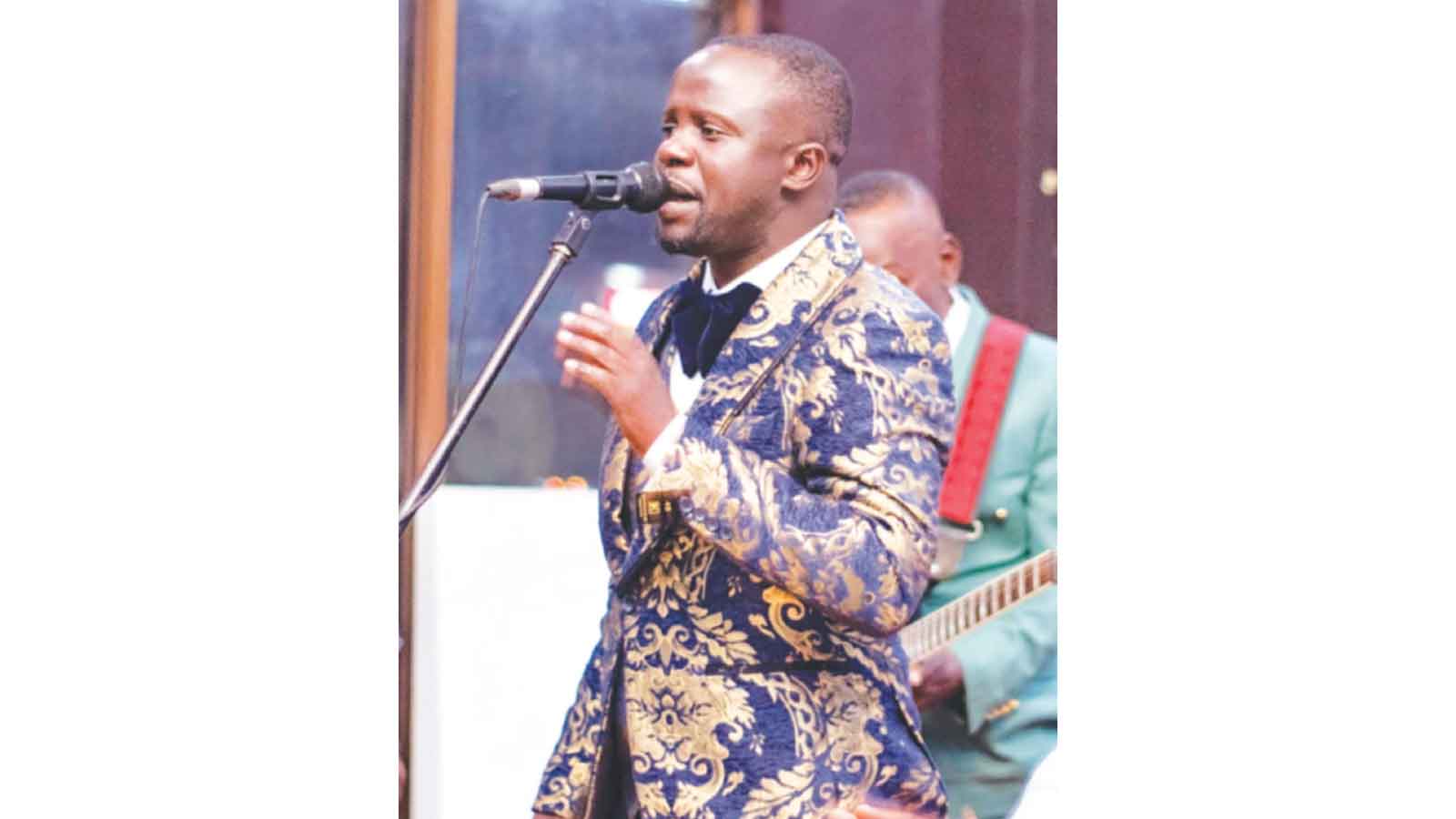
Tafadzwa Zimoyo
Zimpapers Entertainment Editor
THE sungura music scene has been set alight by fierce debate, speculation and rivalry talk, as Mark Ngwazi finds himself at the centre of a storm.
Social media users are questioning whether Ngwazi has been forced to abandon his album launch by a counter-attraction dubbed “Chesology Festival” that is set to be held on July 31.
Initially, the rising sungura singer had opted to officially unveil his forthcoming album on August 1 at Alex Sports Club, but has since shelved the plans indefinitely.
His poster, though, had not named the launch venue, but he announced it on his social media pages via video.
Critics have been questioning if this is a strategic retreat or complete panic from the youthful singer’s camp.
What was meant to be a confident countdown to his eighth studio album, “Bhazi Haritsiki Ari Mugomo,” has instead turned into one of the most talked-about industry pauses in recent times.
Ngwazi aggressively rolled out his promotional campaign just weeks ago.
Posters were circulating, stories from media houses and bloggers were in roll, and anticipation was building toward an August 1 release that fans believed would cement his growing status in the Sungura space.
Then came the sudden shift.
Without warning, the artiste announced a postponement of the album launch, citing “recent developments in the industry” and hinting that certain unnamed individuals were “throwing spikes in his plans.”
The statement, vague, yet loaded, immediately triggered interpretation, suspicion and online debate.
And that is where the narrative took a sharp turn — with fans split between calling it strategy or fear.
The question across social media platforms is blunt: did Ngwazi chicken out?
The conversation intensified further when Sungura legend Alick Macheso dropped a major announcement of his own, unveiling plans for a high-profile Cheso Power Festival set for July, featuring South African star Makhadzi.
By the way, this is a day after, whether different venues or not; the fact remains the same that the Sungura war continues, and how was it possible to have genre shows a day after the other?
Some say music is business, but in this instance, one was to hit a brickwall.
The timing sent shockwaves through entertainment circles. Within hours, Macheso’s announcement dominated discussions, shifting attention from studio releases to a massive live performance spectacle with regional appeal.
The contrast between the two developments has now become the centre of industry conversation.
Was Ngwazi’s delay a reaction to mounting pressure?
Or was Macheso’s announcement simply a coincidence that exposed timing challenges in Ngwazi’s rollout strategy?
Industry voices remain sharply divided.
Some critics argue that Ngwazi’s sudden silence after a strong promotional build-up reflects uncertainty in the face of a highly competitive landscape.
They point to the abrupt shift in momentum as evidence that external pressure may have influenced the decision to pause.
To them, the perception of hesitation has already taken root — regardless of intent.
However, others strongly reject the idea that Ngwazi has stepped back due to fear or pressure.
Promoters and analysts suggest that the move could be a calculated marketing decision designed to avoid a direct clash with a major “regional” entertainment event that has already attracted commendable attention.
“In this industry, timing is everything,” one insider explained. “Releasing an album when a major festival is dominating conversation can bury your project. A delay can actually be a strategic reset.”
Still, ambiguity in Ngwazi’s original statement continues to fuel speculation. His reference to “spikes being thrown in his plans” has become a focal point for fans trying to decode whether internal rivalry, scheduling conflict, or psychological pressure played a role.
On social media, reactions remain polarised. Some fans accuse the artiste of losing momentum after early hype, while others defend him, insisting that the delay reflects discipline and long-term thinking rather than fear.
“People think silence means weakness,” one supporter wrote online. “But sometimes it means preparation.”
Meanwhile, Macheso’s Cheso Power Festival has strengthened his position as a dominant force in live entertainment.
The inclusion of Makhadzi has amplified anticipation, positioning the event as a cross-border cultural showcase rather than just a concert. This has further intensified comparisons between the two artistes — one commanding attention through live spectacle, the other recalibrating a studio release.
Yet industry experts caution against reducing the situation to a simple rivalry narrative.
“What we are seeing is a clash of strategies,” one analyst noted. “One artiste is building a recorded music moment, the other is dominating live performance space. Both are powerful, but they appeal differently.”
For Ngwazi, the challenge is no longer just about the album — it is about narrative control. The delay has already become part of his story, and in the fast-moving world of music, stories often matter as much as sound.
For Macheso, the announcement reinforces authority, timing and industry presence. Between them, Sungura is experiencing a rare moment where silence, strategy and spectacle are all being interpreted as signals in a larger power game.
And as fans continue debating whether Ngwazi has chickened out or cleverly recalibrated, one truth stands firm: In today’s Sungura arena, every move is loud — even the quiet ones.
Ngwazi’s decision to pull out is victory for Sungura where there will be no counter attractions.