tawandamusarurwa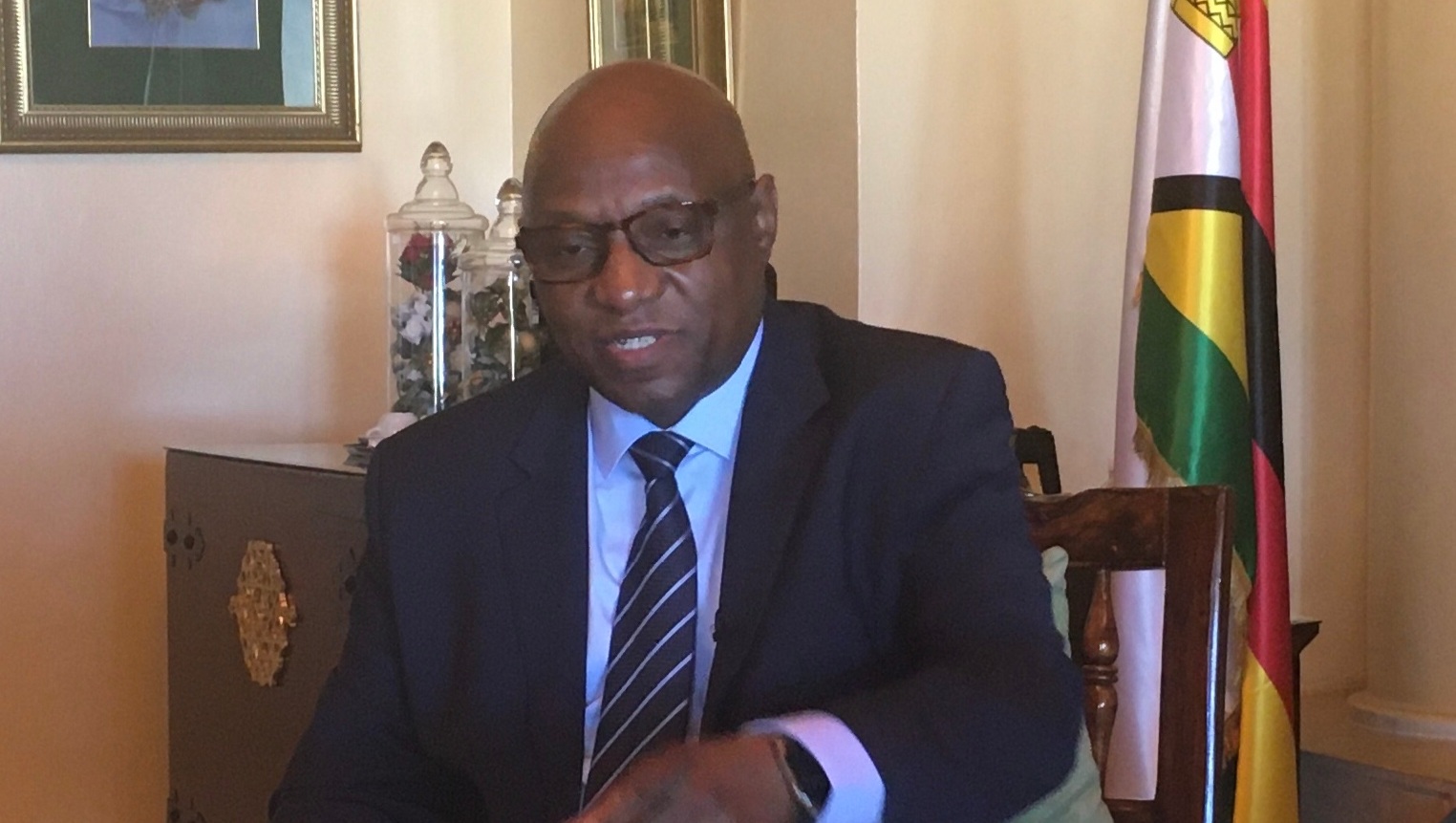
On Saturday and Sunday, the government of Japan, together with representatives of its private sector, including aid and trade development agencies, met African Union (AU) member states in Tunisia for the eighth edition of the Tokyo International Conference on African Development (TICAD 8) to discuss areas of possible mutually beneficial cooperation. At the summit, Japanese Prime Minister Fumio Kishida announced a US$30 billion package for investment in Africa over the next three years. It is a marked increase from the US$20 billion pledged at TICAD 7 in Yokohama, Japan, in 2019.
The Sunday Mail recently spoke to Zimbabwe’s Ambassador to Ethiopia and Permanent Representative to the AU and UNECA (United Nations Economic Commission for Africa), Mr Taonga Mushayavanhu, on what TICAD 8 means for Zimbabwe. We reproduce his responses below.
*************************************
Key outcomes from (TICAD 8)
The US$30 billion announced by Prime Minister of Japan Fumio Kishida is clearly broken down into what I would call three broad areas: First, US$5 billion is going into what the Japanese called enhanced private sector support. This support really hinges on Japanese companies wanting to invest into Zimbabwe. So this is where we now have to work because it is then de-risking Japanese companies that want to invest in Zimbabwe. So we have to work at attracting Japanese companies that want to invest into Zimbabwe.
And then the other major area is what they call the Green (Growth) Initiative (with Africa), where again Japan is putting US$4 billion.
This initiative is really to develop green initiative, be it climate adaptation and mitigation for Africa in terms of climate change. So, there we can also try and attract investment in hydropower; for example, small hydros, or even the big hydros, as part of this green initiative.
Then the other area is the area of training, where Japan has pledged to train 300 000 Africans, and Zimbabwe always does well in the area of education and training. So it is up to us at the bilateral level to then seek some of these training opportunities in Japan.
And also the area of agriculture, which Japan has pledged US$300 million together with Africa Development Bank (AfDB), and this US$300 million is for the rest of Africa, so it is up to us to come up with viable projects in terms of food production that can be supported by Japan.
And also they have pledged to invest US$1,08 billion to the next replenishment of the Global Fund to support HIV/AIDS, malaria and TB. And also they have put some money for Covid-19 vaccine manufacturing and distribution under the Covax facility.
What’s in it for Zimbabwe?
TICAD works at a broader level. It is really just coordinating policy, but at the end of the day, these programmes are implemented at the bilateral level. So it is up to us to come up with viable projects, approach the Japanese embassy, then they will approach either JICA (Japan International Cooperation Agency) or JETRO (Japan External Trade Organisation) – the Japanese agencies – to then realise some of these projects. It is a process but it is doable?
Pressing issues on peace and security in Africa
From the vantage point of Zimbabwe’s membership of the Peace and Security Council (of the African Union), I would say there is a general worry in terms of the regression of peace and security. For the first time in recent years, or since the AU was actually created, we now have instability and cases of terrorism in all the five regions of Africa (Northern, Eastern, Western, Central and Southern Africa). Southern Africa never had until the current situation in Cabo Delgado (Mozambique), so all the five regions are actually afflicted by terrorism. In terms of unconstitutional changes of government, we now have a situation where we have four countries (Guinea, Burkina Faso, Mali and Sudan) suspended from the AU at any given time …
We had a summit in Malabo (Equatorial Guinea) in May which focuses on terrorism and unconstitutional changes in government, and what we realised at that summit is that the normative policies are there; what we need is implementation. Where there is regression, we need to quickly move in … So there are a myriad of causes to these challenges, but Africa is addressing them through the Peace and Security Council. We are doing a lot in terms of policy direction … and also interventions directly in terms of troops, whether it’s in Somalia, Cabo Delgado or elsewhere.
What the AU, as continental body, is doing to promote development
Africa, at the level of the AU, just gives policy direction and also in terms of mobilisation of resources, but implementation is always at the country or sub-regional level. In terms of infrastructure, for example, we have this PIDA (Programme for Infrastructure Development in Africa), where we work together whether in terms of energy generation projects; fibre internet linkages. All these are coordinated at the level of the AU but implementation is done at the lower level. So far we have come up with so many policies in terms of integrating Africa, because that is where the AU comes in. Also, we have other policies in terms of trade, which has resulted in the African Continental Free Trade Area (AfCFTA), where we are now working at coming up with common tariffs, common customs systems so that trade can start in earnest, and also other issues in terms of trade policies. And then in terms of agriculture, we are also pursuing common agricultural policies to see how we can work together in terms of fertiliser manufacture, and Zimbabwe manufactures fertilisers, which we hope will be integrated in the AU for funding purposes. So we want to work together in terms of assisting agricultural development in Africa so that we do not rely on other external parties like what is happening now with the situation in Ukraine and the shortage of grain in some parts of Africa.
How can enterprising and innovative youths benefit from the TICAD?
In the US$5 billion that was announced for enterprise support, I think that is where our African innovators can benefit from this Japanese wherewithal, whereby they need to then partner Japanese companies, because it is the Japanese companies that can easily access these funds. So our companies have to partner Japanese companies or go through the Japanese aid agency JICA or JETRO on the trade side to then access these funds and benefit from the Japanese assistance.
*Compiled by The Sunday Mail Deputy Editor Darlington Musarurwa


 Online Reporter