admin
adminMorris Mtisi
ZIMBABWE will remember you for the most befitting graveside speech you crafted and delivered in sweet unadulterated Ndau dialect. Eich, msharuka mani! Veshe vakadzionera mhingo yedede — translated to mean, “They experienced it (Ndau) first hand like a baboon’s baby-strap.”
Mark Antony, Shakespeare’s flaming orator at Julius Caesar’s burial, would have kindly asked you to speak at the great Roman Emperor’s graveside.
Many have written and said and expressed much about the late national hero, Major-General Eliah Bandama, some desperately struggling to find suitable words to describe a hero not one word, not two or three words would sufficiently describe what and who he was.
This writer grew up with the young boy Eliah Bandama. We went to the same school — Chikore Secondary School, I was two-three grades ahead of him. I grew up with Freddy Bandama and the rest of the family. He (the late Major-General) called me sekuru-uncle, because his mother came from the Shiri clan. I could easily write a sincere and heartfelt eulogy, an ode or epic poem, or Shakespearean sonnet about the departed gallant and illustrious son of Zimbabwe. Not any more. Let the national hero rest is peace. The widow, children, family and friends want to have a break to allow painful tears to dry up as quickly as possible.
This writer wants to shift attention to something different; to Freddy Bandama and his Ndau oratory on the day of laying his young brother to his final resting place at Heroes Acre. My interest in doing so is profoundly influenced, not by the business of the dark day, namely laying a national hero to rest (enough has been said about the tragic part of the narrative), but by the complex verbal civilisation Freddy Bandama perfectly perpetuated that day; a sombre civilisation too complex to be understood in toto.
Freddy did not see the tree because of the forest. He perfectly blended business, civil politics, art, science, religion, national and family loss, excitement, joy, and grief into one valediction clamouring for everyone’s attention. By selecting the best in Major-General Bandama, his own personal hero and fittingly a national hero as well, Freddy selected this best for its exclusive vividness and succeeded to exhibit the immortal power invested and living in the late Major-General. That aside.
In his perfect blending of his prepared speech (in English) and spontaneous intercessions in stainless Ndau, Freddy managed to light up many faces with elastic smiles. Some mourners burst into uncontrollable laughter while many were visibly left in stitches. At one point he nearly brought down the house. The more senior chefs were seen importantly concealing what was evidently equal amusement.
The television footage as usual notoriously known for recording every minute photographic detail, screened elated pairs exchanging whispers in their ears and stretching those smiles into obvious gestures of mystical enchantment. Did you not see that on television? I did.
I have never seen a more hilarious moment of grief before; not at the National Shrine. Not happy in the denotative sense of the word! Happy in the sense of allowing the celebration of a hero’s life and brave soldier’s ideals; fighting and victory, to triumph over a sense of tragic loss.
Little wonder. Eliah Bandama, Cde Nhamoyesango, as he was fondly called during the liberation war, in his life had a permanent sense of humour. May be through tele-pathetic command from his cold casket, the brave soldier interred in the lifeless body once naturally endowed with a light-hearted side, was saying, “What’s the point now? Big boys don’t cry. Why drown in your own tears? I have done my best. Take the baton and run the race to its finish.” And so inevitably, the best was to celebrate, not to mourn! And who could have created Eliah’s desired environment better than his own brother?
And Freddy did not disappoint. Proudly resembling President Robert Mugabe’s characteristic heroic speeches hook, line and sinker, he passed for state president in style and emotive rhetoric; like Baba Mugabe typical of a great orator we all know him to be, flexibly and perfectly shifting away from his prepared speech preferring to speak from the heart in perfect Shona, Freddy instead unflinchingly dug in, in marvellous Ndau.
What he can speak best! Proudly and fearlessly. A Ndau president for 10 to 15 minutes! What an honour and privilege! But we cannot separate Freddy Bandama from his thunderous Ndau, can we? Hard to imagine. Slightly academic too, but this writer is tempted to think and believe that Freddy’s magical comic relief had everything to do with ChiNdau, and not the English part or indeed the national hero here being laid to rest. The two alone would perhaps have not generated so many executive smiles and laughter. Which brings this writer to the crux of the matter!
What is it in or about ChiNdau which makes all Zimbabweans anxious, alert, amused, nauseated, envious, hypnotised when they hear it? Especially spoken by a typical, fluent Ndau-speaking Chipingelite? Is Ndau very romantic? Is it sexy? Is it . . . what is it? Does it sound like ChaChaCha or Rumba? Does it sound like Calypso music, hip-hop or ghetto-ragga? Greek? Spanish or Costa Rican? Zvinombonyanyokudini mu Ndau echireketa rurimi rwamayake? Zvinoshekedza?
Ndaus do nor smile even one centimeter, laugh or cry when Ndebeles speak? They find nothing funny or strange about a Venda, Zezuru, Karanga or Kalanga speaking rurimi rwavanaamai vavo (their mother tongues). Is it because Ndaus have no sense of humour?
Why do those who always find something to laugh about Ndau not laugh when other Zimbabwean nationalities speak their vernaculars? I have never seen or heard about someone finding amusement in Ndebeles conversing — Why? Laughing in some of, if not most instances is an understatement. Sometimes it is not difficult to detect a sense of mockery in the way people talk and laugh and comically imitate the dialect.
As if to say, “What on earth do you think you are speaking?” But who are you to make fun of other people’s natural tool of communication? Does language or dialect make anybody better than others? Does it determine or measure social status and personal worth? Strange, isn’t it?
Oliver Mtukudzi’s old hit! If you cannot understand a dialect, fine! But where does the mockery and laughter come from? But it can’t be lack of understanding which causes the strange stir of sinister amusement. Or is it interest? There is a lot of English language people do not understand. Why do they not laugh or mock those who speak English? Why do people not burst into laughter or even muse when Obama and Cameron speak? English sounds very musical — why do they not laugh? And the Chinese — also very interesting, aren’t they? Why not whisper, smile, grin and mock?
The French? And all these British, Europeans and Americans — have you ever seen one laughing their lungs out because they have heard you speak Shona, Ndebele or Venda? They just look at you stupidly and wonder whether you are talking to them or singing — that’s all. They do not laugh or smile, do they? Otherwise the whole world would be a vast entertainment stage of laughing people everywhere — laughing at each other.
Well, I hope I am wrong in my assessment of this seemingly inherent inimical dialectal tribalism everyone uses lightly to demean and despise a small Zimbabwean community which is very much one with everyone else. But if it is not mocking Ndau people from Chipinge when they proudly speak their own dialect, what is it? Is it joy, genuine amusement, fear or admiration? There must be something about Chipinge and ChiNdau that people fear, envy, admire or hate? What is it? That is the question no one has ever been brave enough to ask or answer. Not even this writer! But for those who still have intellectual stamina, curiosity and purpose, why not engage in another research study for a second or third doctorate?
Meanwhile this writer and indeed many of the people of Chipinge, proud not only to be Ndau, but loving Zimbabweans, must do everything we can to make sure this beautiful dialect is not driven into extinction by Ndaus themselves and those who find it and their speakers comical sources of entertainment.
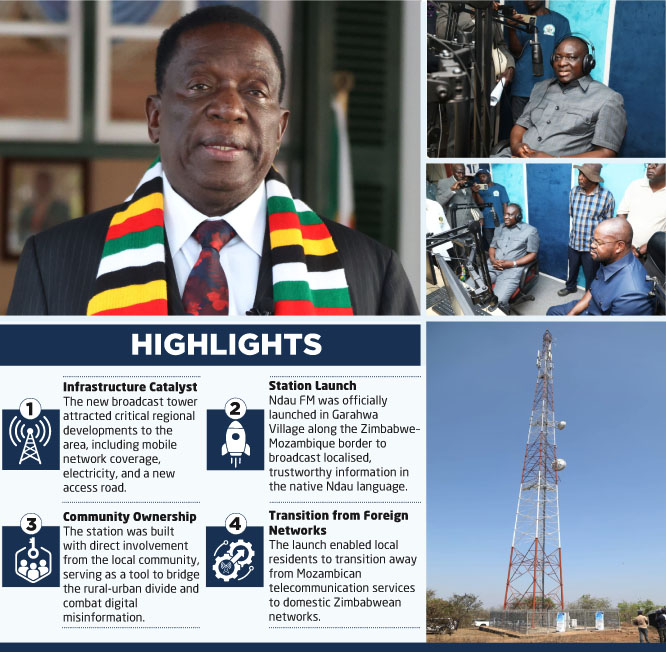
A Ndau tabloid in Chipinge, I suggest titled Mashoko Ekanyi or Kwezi YeKanyi, would not be a bad idea, would it? Written in stainless Ndau to preserve the dialect and cultural values of the people of Chipinge! Or a community radio — even if it is called KaFm, better than no radio at all in Chipinge. And the proposed radio station to be directed by Freddy Bandama. Mwoshoora? Why not? Broadcasting live to Ndaus, by Ndaus in ChiNdau!
Again to preserve the Ndau values and cultural heritage! And of course to celebrate and protect ethnic identity — a right democratically reserved for all language groups in Zimbabwe! These sentiments encapsulate an issue long overdue.
I rest my case with the wise lyrics of legendary reggae superstar, the late Prisoner hit-maker, Lucky Dube: “Hey Rastamen/Hey European/Indianamen — we better come together as one!” Lest we forget the days of sensible music!


 Online Reporter