Online Reporter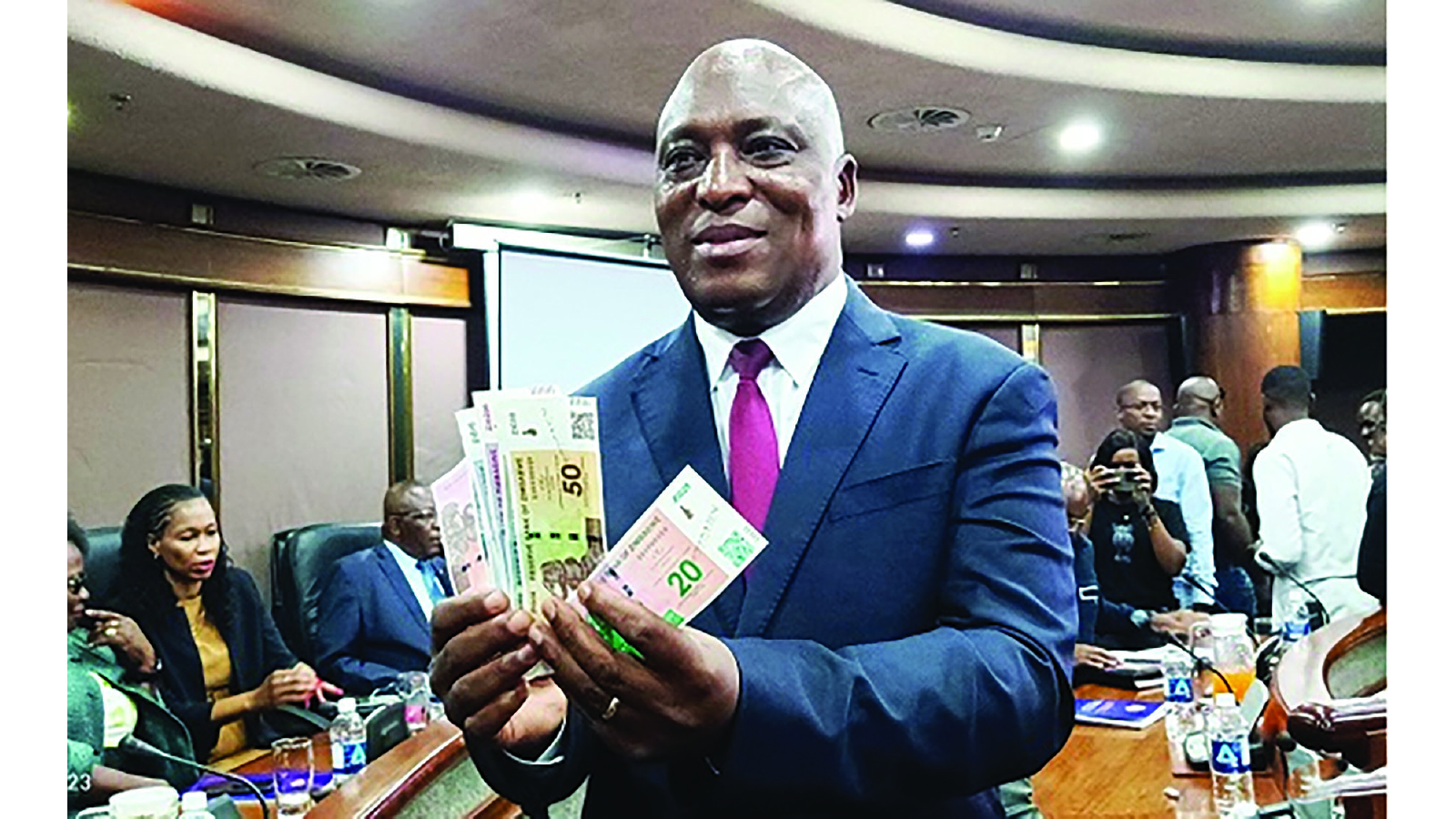
Business Reporter
Zimbabwe’s gold-backed currency, ZiG, has completed its longest period of stability since being launched in April last year, increasing confidence about prospects for prolonged price stability, improved investor confidence and a recovery in household spending power.
Analysts and business leaders say the steady exchange rate has started to reduce inflationary pressures and encourage transactions in the local currency, dissipating scepticism over whether the stability would last.
The new currency has held its ground, casting away the memory of Zimbabwe’s troubled past, when inflation at 208 million percent in July 2008 climbed to its highest level, wiping out all the local currency savings in the process.
Zimbabwe had not experienced any prolonged currency stability between February 2019, when the local unit was reintroduced, and April 2024, when the ZiG was launched.
The Zimbabwe dollar experienced significant devaluation and depreciation since its relaunch in 2019, following a hyperinflation-induced 10-year hiatus, leading to reduced confidence and a widespread reliance on the US dollar for transactions.
But the picture has changed.
Monthly inflation in Zimbabwe has mostly been declining since February 2025 due to sustained tight monetary and fiscal policies and the stability of the ZiG currency.
Business leaders, economic analysts and authorities have been paying the most attention to the trajectory of monthly inflation, as its computation over a given year-long period determines the annual rate.
The low inflation, even dropping to negative rates, has averaged around 0,5 percent to 0,6 percent from February to July 2025.
Zimbabwe’s monthly inflation rate is projected to average below 3 percent for the remainder of the year, according to the Reserve Bank, and potentially revert to the low levels seen between February and July 2025.
The prolonged local currency stability has seen the gap between the official exchange rate and the parallel market rate, which affects local currency prices, falling from 100 percent at one point to around 26 percent.
The central bank forecasts annual inflation to fall below 30 percent by the end of 2025, following a temporary peak in September 2025 due to a base effect from 2024 price increases.
For the ordinary Zimbabwean, whose incomes were often eroded by persistent currency swings, the positive impact of the more stable ZiG is already being felt through prolonged price stability and other essentials such as public transport fares.
“Predictable exchange rates make it easier for people to plan purchases and avoid panic buying,” said Gladys Shumbambiri-Mutsopotsi, an economist. “Stability reduces the need for traders to charge extra to cover risks, and that helps to protect household budgets.”
Prolonged stability, she added, gives authorities leverage to anchor expectations, a crucial step in breaking the cycle of inflationary fears that has haunted the economy since the hyperinflation of 2008.
The business community, long constrained by unpredictable exchange rates and a shortage of working capital, says the calmer environment is giving firms room to plan.
Dr Nxaba Ndiweni, an industrialist, said local manufacturers were beginning to benefit from being able to price in the local currency without fearing sudden losses.
“The stability we are seeing now is a lifeline,” he said. “When companies can rely on a currency that holds its value, they are more willing to commit to production and investment.”
Importers also report reduced reliance on holding scarce US dollars for day-to-day operations, cutting transaction costs. Some firms say they are shifting procurement to local suppliers, encouraged by steadier pricing.
Namatai Maeresera, an economic analyst, said recent moderation in producer prices was encouraging, but warned that fiscal discipline would be key.
“Annual inflation remains high by global standards,” he noted. “If the Government avoids monetary slippage and keeps reserves intact, confidence will continue to build.”
Positive sentiment, he added, could shift Zimbabwe out of the high-risk category, helping to attract capital and restore credit lines.
The Reserve Bank of Zimbabwe says the gold backing for the ZiG and tighter money supply controls have helped to slow inflation, a claim echoed by several local economists.
If the trend is maintained, analysts believe interest rates could gradually fall, easing borrowing costs for companies and households.
Lower lending rates would stimulate credit for small businesses and mortgages, while higher real wages would support consumer demand.
“The potential benefits are very real,” said Ms Shumbambiri-Mutsopotsi. “As inflation comes down and interest rates ease, people will have more disposable income, and that feeds back into stronger economic activity.”
For workers whose wages have been eroded by volatility in the exchange rate, the real test will be purchasing power. Economists say that if inflation slows further, households could see a measurable rise in disposable income within two years.
Mr Maeresera argued that improved confidence in the local currency would encourage banks to lend more, unlocking capital for entrepreneurs and job creation.
“This creates a virtuous cycle,” he said. “Higher incomes boost demand, firms expand production and the economy grows from within rather than being wholly reliant on foreign currency inflows.”
Officials have pledged to maintain strict fiscal discipline to protect the ZiG, while strengthening the willing-buyer, willing-seller foreign-exchange system to keep the parallel market in check.
Dr Ndiweni urged authorities to use the stable conditions to roll out industrial reforms.
“Public procurement can be a powerful tool,” he said. “If the Government prioritises domestic firms, stability will translate directly into jobs and higher output.”
For now, though, the prevailing narrative is more positive than Zimbabwe has seen in years. Prices are behaving more predictably, companies are planning with more certainty, while consumers face no surprise at the till point.
“The ordinary man in the street feels it most when his wage can stretch a little further,” said Ms Shumbambiri-Mutsopotsi. “That’s starting to happen, and if we stay the course, confidence will return.”
If the currency’s stability endures, Zimbabwe could see annual inflation steadily fall, interest rates ease, and growth prospects brighten.