admin
admin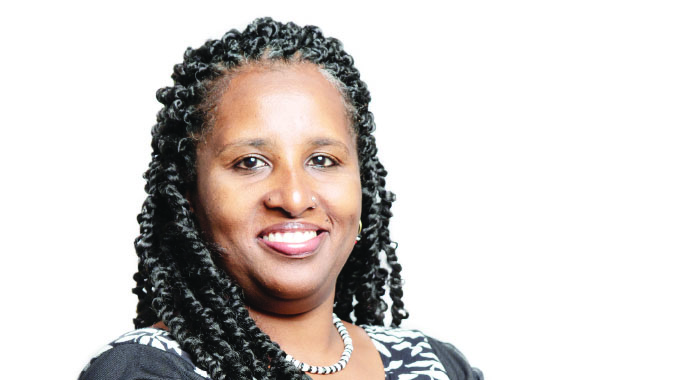
Ruth Butaumocho African Agenda
GROWING up in the Gulf Area (Qatar) to Sudanese parents, Dr Linda Haj Omar had dreams of becoming a medical doctor.
After completing her secondary education, she successfully enrolled at a medical school in Sudan, a development that was to firm her dream to assist women, children and the vulnerable people around community public health.
She recalls the first day she attended her first lecture at Ahfad University for Women, in Sudan, in 1996 where she immediately knew she had made the right career choice.
Listening to the tutor outlining what the medical field entailed, Dr Omar felt at home, and it was at that juncture that she vowed to leave a legacy by contributing towards public health in Africa and beyond.
More than three decades after that declaration, Dr Omar is reliving her dream.
She recently carved her piece of history when she established Medlico Research and Training Centre in Harare, Zimbabwe.
Medlico, an integral research and training centre, recently opened its doors to the public, adding to the existing bodies that train medical personnel and offer research facilities to various organisations, institutions and individuals.
The training and research hub, which is fully funded by Dr Omar, was established in response to the overwhelming response to the need for data, not only in Zimbabwe, but across Africa.
“I have a role to play in community public health. There is no better way of doing it than creating a conducive environment to enlarge and enhance knowledge,” she said.
Dr Omar said establishment of the research centre was also aimed at enhancing public health issues and community needs, through applying evidence-based research to support the formulation of policy, strategies and guidelines.
It is also her way of paying back to the community by ensuring that the girl child, women and disadvantaged groups are catered for through a number of community-based projects on public health that Medlico will undertake.
In coming up with the training and research centre, Dr Omar was looking at the concept of need-driven research, which is also in line with the Zimbabwe government’s national policy of research and innovation, key to economic prosperity, improvement of citizenry livelihoods, improving access to quality education and zero hunger across the continent.
The research and training centre is expected to present critical gaps and needs for study in most of the African countries including Zimbabwe, thus creating an opportunity to invest in research interventions to support the national priority areas.
Dr Omar, who is no stranger to research having worked extensively with various people and communities in 27 African countries – Zimbabwe included – feels there is a yawning gap in the field that deals with public health related issues.
It was during her deployment to Zimbabwe to offer support during cholera outbreaks that she was impressed with the work culture in the health sector and flawless implementation of strategies, that she resolved to set up a research and training centre in Zimbabwe to complement existing bodies.
True to her aspiration, an idea turned into a big project, giving birth to Medlico right in the heart of Harare.
The centre works and contributes towards developing holistic solutions to improving the quality of life and achieving Sustainable Development Goals (SDGS), through collaborating with other existing institutions and stakeholders to find solutions and interventions that can tackle issues affecting communities.
The research centre through a collaborative approach will put together a comprehensive plan to provide multi-disciplinary research and consulting related to public health, medical and non-medical related issues.
It will also provide individual and institutional technical capacity building and offer a comprehensive suite of tailor-made research advice on aspects and be a hub of data and statistics, not only in Zimbabwe, but across Africa.
Quality data is essential for national governments and institutions to accurately plan, fund and evaluate developmental activities.
However, access to data remains one of the biggest problems that policy makers, academics and other health institutions face on a daily basis.
Even when research has been carried out, some researchers are not willing to share results of their study, and data ends up in personal devices, computers, offices, dark rooms, and often stays there for a very long time without ever being used consecutively and productively.
The current world in which information moves at the speed of light, calls for constant demand for information and data, hence Africa cannot afford to be left behind in ongoing tidal waves of development which is directly tied to research, innovation, development and the availability of data, statistics and information.
It has since been established that lack of quality data in Africa not only limits the continent’s ability to generate a pertinent body of knowledge but also prevents analysts from generating the evidence that policy makers need to make proper decisions in influencing the development of the continent.
According to the Mo Ibrahim Foundation’s latest African Governance Report, “quality statistics are essential for all stages of evidence-based decision-making, which include monitoring of social and economic indicators; allocating political representation and government resources; guiding private sector investment; and information for the international donor community for programme design and policy formulation.”
The good thing is, all hope is not lost as attested by the number of continental efforts that are being made to ensure that data is available, as part of Africa’s developmental strategies.
Together, African countries have taken steps to strengthen the availability of reliable data through initiatives such as the Africa Data Consensus, established in 2015 with the aim to create a new statistical landscape, as well as the African Charter of Statistics set up in 2009.
As a result of these initiatives, several African countries are halfway through the First Ten-Year Implementation Plan (2014-2023) of the African Union’s Agenda 2063, and have 10 years left to achieve the globally agreed 2030 Agenda and its Sustainable Development Goals (SDGs).
The nations know that data has become imperative because they need to swiftly adapt resources and policies accordingly, which is critical in effectively implementing both agendas.
With the establishment of research centres like Medlico, the future of Africa is set on a positive trajectory.
- Feedback:[email protected]


 Online Reporter