Online Reporter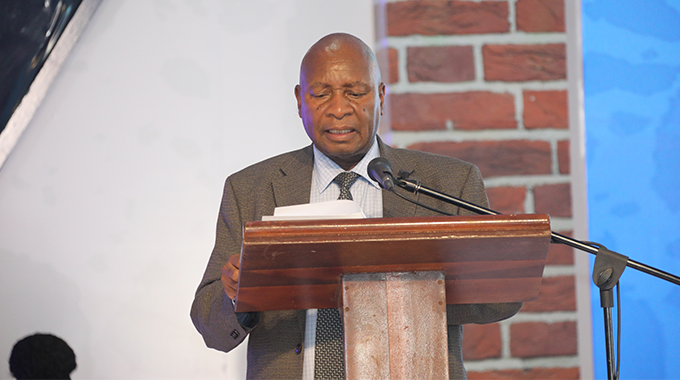
Obey Sibanda
PUBLIC Service, Labour and Social Welfare Minister Edgar Moyo, has reaffirmed Zimbabwe’s commitment to fostering peace in Southern Africa. He made the remarks during the 76th Executive Committee meeting of the United Nations High Commissioner for Refugees (ExCom) on Monday.
Minister Moyo stated that Zimbabwe is playing a proactive role in spearheading joint diplomatic efforts between the Southern African Development Community (SADC) and the East African Community (EAC), to achieve lasting peace in the eastern Democratic Republic of Congo.
“This year’s ExCom convenes at a critical juncture, as the world continues to grapple with escalating geopolitical tensions, conflicts, wars and climate-induced disasters,” he said.

Minister Moyo emphasised that the global humanitarian crisis has been worsened by a financial crisis affecting the United Nations, highlighting the dire situation faced by the United Nations High Commissioner for Refugees (UNHCR).
“The UNHCR has been struggling with a widening funding gap in recent years, and the current circumstances have rendered the situation unsustainable, with catastrophic consequences for refugees,” he said.
Following the 80th session of the United Nations General Assembly, world leaders unanimously reiterated the necessity of seeking lasting solutions to the global humanitarian crisis. Minister Moyo noted that Zimbabwe, along with other delegations, has called for peace and an end to ongoing conflicts worldwide.
“This is the only viable solution to alleviate the burdens faced by host nations that open their borders to forcibly displaced individuals fleeing the ravages of war,” he said.
Zimbabwe has adopted a protection-centred approach to refugee welfare and is at present in the process of amending the Refugees Act. This initiative includes benchmarking missions to learn from other jurisdictions and align Zimbabwe’s legislation with international best practices.
In addition to these legislative efforts, Minister Moyo called on the international community to uphold the principles of burden and responsibility sharing.
He warned that the recent downscaling of operations by the UNHCR, including the closure of the Southern Africa bureau, threatens to reverse progress made in the region and could negatively impact refugee protection.
“We urge the UNHCR and financial donors to provide more flexible funding to support refugees and respond to evolving emergencies,” said Minister Moyo.
Zimbabwe has successfully integrated refugees into various sectors, including education, health, sports and social protection, by leveraging resources and expertise through strategic partnerships with the UNHCR, the private sector, non-state actors and refugee-led organisations.
Minister Moyo stressed the need to strengthen collaborative efforts, particularly in transforming the Tongogara Refugee Settlement into a district service centre.
“The Government of Zimbabwe is committed to mainstreaming refugee issues into all Government programmes, especially as we launch the second phase of our National Development Strategy 2. This will enhance our ability to fulfil the pledges made at the Global Refugee Forum in 2023,” he said.
Aligned with the Government’s national development philosophy of leaving no one behind, refugees in Zimbabwe are now granted access to civil documents such as birth certificates, national identity documents and passports.
Moreover, the validity of national identity documents has been extended from two years to five years, reflecting the country’s hospitality and generosity towards refugees.
Minister Moyo also commended the dedicated efforts and leadership of High Commissioner for Refugees Filippo Grandi since 2016, wishing him success in his future endeavours as the UN prepares for a smooth transition to a new High Commissioner in 2026.