Online Reporter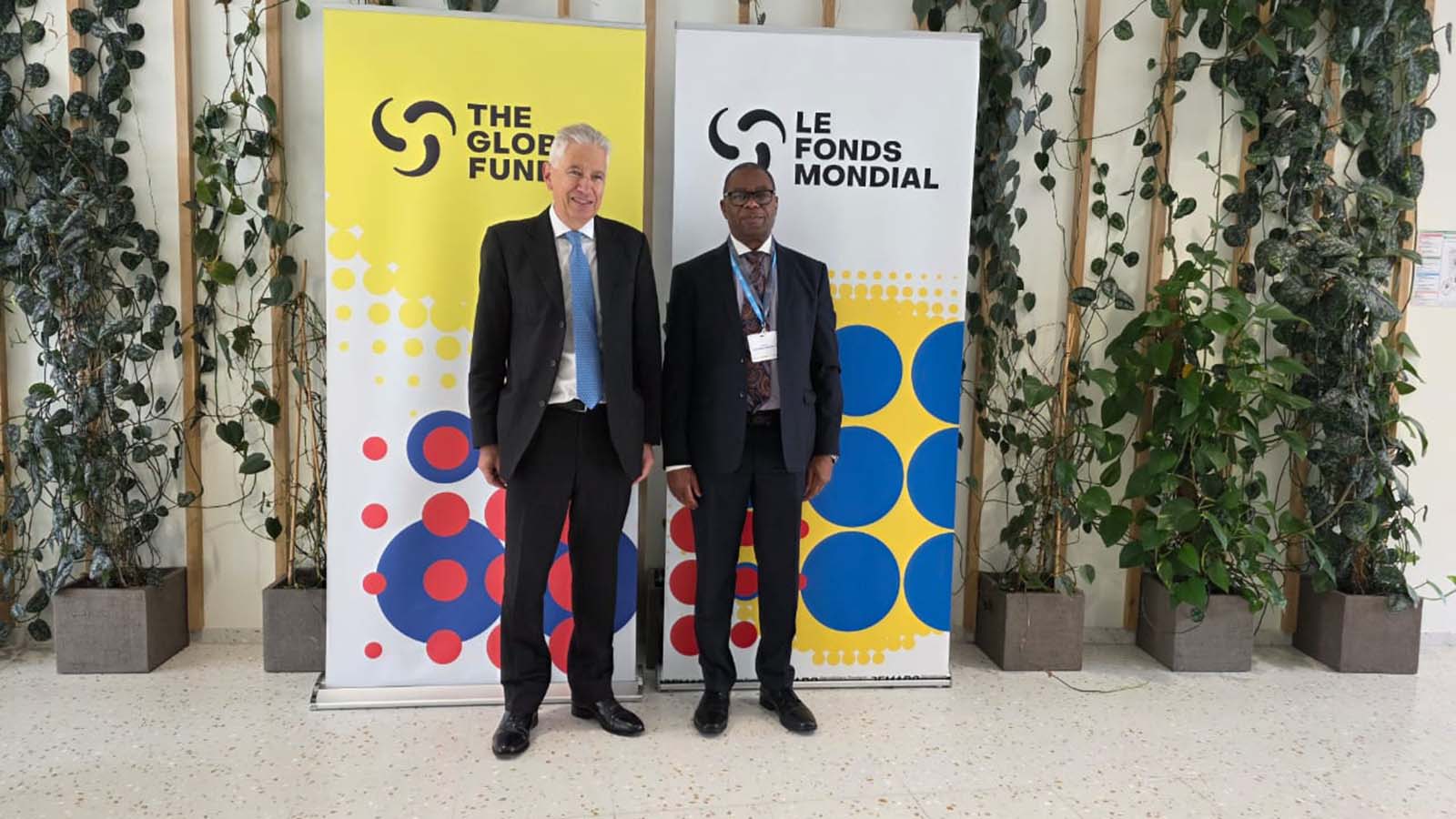
Rumbidzayi Zinyuke in GENEVA, Switzerland
Zimbabwe is pushing for greater flexibility and efficiency in the management of Global Fund-supported health programmes as the country moves to safeguard gains made against HIV, tuberculosis (TB) and malaria.
This emerged during a bilateral meeting between the Minister of Health and Child Care and Global Fund officials on the sidelines of the ongoing World Health Assembly in Geneva.
The discussions focused on preparations for the next Global Fund grant cycle (GC8), Zimbabwe’s transition from the Additional Safeguard Policy (ASP), domestic health financing reforms and strategies to maintain critical health programmes following the withdrawal of United States funding support in some areas.
Health and Child Care Minister Dr Douglas Mombeshora said Zimbabwe remains committed to sustaining strong programme performance while improving efficiency and strengthening domestic ownership of health programmes.
He said the country has achieved the 95-95-95 HIV targets and continues to make significant progress in malaria elimination and TB reduction despite economic and climate-related challenges.
“We are very grateful that the GC8 aid has been approved, close to US$413 million, and we are very happy about that,” he said.
Dr Mombeshora said Zimbabwe is seeking greater flexibility within the new funding cycle to protect gains made in the health sector, particularly in the provision of commodities, insecticide-treated nets (ITNs) and support for village health workers.
He said the Government is also advocating for a single integrated grant covering TB, malaria and resilient and sustainable systems for health (RSS) to reduce fragmentation, improve efficiency and lower administrative costs.
“We have achieved the 95-95-95 targets on our HIV programmes. There are always challenges in terms of children. We are not yet there, and I think it’s something that we are working on,” he said.
The minister said Zimbabwe had the capacity to directly manage Global Fund grants as the country works towards exiting the ASP framework.
He added that domestic health financing reforms were progressing through the proposed National Health Insurance Bill and the strengthened role of the Health Service Commission.
“We have been trying to improve the working conditions. We now have the Health Service Commission that was put in place to make sure that they look specifically for health workers,” he said.
Dr Mombeshora said the country is also making notable gains in malaria control, with more than half of rural districts now at the elimination stage.
He, however, noted that climate change and cyclones affecting eastern Zimbabwe continued to contribute to periodic increases in malaria cases.
The minister said Zimbabwe is also strengthening its health systems through improved health worker training, retention strategies and digital learning platforms, although challenges linked to migration of skilled personnel remained.
Global Fund Head of Grant Management Division Mr Mark Eddington commended Zimbabwe for maintaining strong programme performance under difficult circumstances, describing the country as one of the Fund’s better-performing partners.
“Zimbabwe remains a well-performing country and a valued Global Fund partner,” he said.
“The 95-95-95 achievement in HIV is impressive. The reduction in TB incidence is impressive and whilst there are challenges in malaria, the downward trend in malaria cases and deaths is also impressive given the climate events.”
Mr Eddington noted that Zimbabwe has historically demonstrated a strong commitment to funding HIV programmes.
The Global Fund also stressed the need for greater value for money and efficiency as the global health financing landscape becomes increasingly constrained.
“The global health financing landscape is a challenge. We have less money than we had last time. As we go into the next cycle, there is a need for continuous oversight, focus on value for money and making sure that funds are used as effectively as possible,” said Mr Eddington.
The meeting reaffirmed Zimbabwe’s commitment to strengthening domestic ownership of health programmes while maintaining cooperation with international partners to protect gains made in the fight against major diseases.