Online Reporter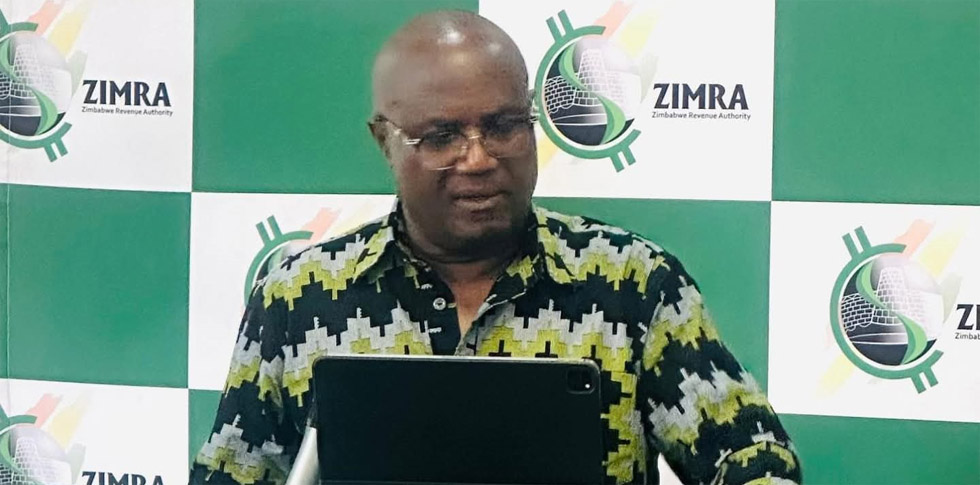
Ray Bande
Senior Reporter
THE Zimbabwe Revenue Authority (ZIMRA) faces significant hurdles in achieving its projected tax-to-gross domestic product ratio of 22 percent by 2030 – up from 14,5 percent in 2025 – due to the country’s largely informal economy. About 75 percent of the country’s economy operates in the informal sector, making tax collection a challenging task.
ZIMRA board chairman, Mr Antony Mandiwanza admitted to the challenges during a strategic planning session in Mutare.
He said the authority’s inability to collect taxes effectively stems from limited information about informal businesses, poor enforcement, corruption, and inadequate tax education among operators.
In his keynote address to guests from the IMF and Ministry of Finance, Economic Development and Investment Promotion, fellow board members, ZIMRA executives, senior management, and staff during a strategic planning session in Mutare on Tuesday, Mr Mandiwanza confirmed that attaining the 22 percent tax-to-GDP ratio in 2030 is a mammoth task.
To overcome these challenges and meet its tax revenue targets, ZIMRA need to develop effective strategies to reach and educate informal sector operators about their tax obligations.
Its efforts to boost tax revenue are crucial for supporting the country’s economic development and public services.
“The rebasing of GDP by ZimStat has reshaped the economic landscape. With this growth comes a national challenge: increasing the tax-to-GDP ratio from 14,5 percent in 2025 to 22 percent in 2030.
“We must also face the fact that nearly 75 percent of our economy remains concentrated in small to medium enterprises (informal). This vast and vibrant sector must be drawn into the mainstream by strategies that encourage inclusion, innovation, and empowerment,” he said.
Tax is typically levied on income, assets, and economic activity. Consequently, an increased GDP often translates to higher incomes, more taxable assets, and increased economic activities, resulting in higher tax revenue.
However, challenges in tax collection within a largely informal economy have prompted some analysts to recommend that ZIMRA simplify tax structures. This could be achieved by introducing simplified tax regimes for the informal sector, thereby facilitating easier registration and compliance.
Other proposed solutions include leveraging technology, such as mobile money platforms, to streamline tax collection and providing comprehensive tax education to informal traders. This will enhance their understanding of tax obligations and the benefits of formalisation.
Furthermore, the Government has been encouraged to offer incentives for formalisation, including access to credit and formal markets, to motivate businesses to join the formal tax net.
Mr Mandiwanza commended the Authority’s efforts in digitalisation of its systems in recent years.
“This is not an ordinary meeting. It is a defining gathering at a critical moment in the journey of ZIMRA and our nation. We are here, not simply to plan, but to shape the future of revenue administration and Zimbabwe’s economic growth over the next five years. Reflecting on the Journey (2021 – 2025).
The 2021–2025 Strategic Plan was a chapter of achievement. We pledged to modernise, and we delivered. Systems such as TaRMS, SAP, Fiscalisation, ASYCUDA, and ECTS are now embedded as cornerstones of our progress.
“We moved from being a manual-dependent organisation to a digital-driven authority. This is a significant milestone, but it is also only the beginning,” he said.
Mr Mandiwanza also spelt out the significant role that AI is expected to play in revolutionising tax collection in the country.
“The next phase of ZIMRA’s journey will be defined by Artificial Intelligence (AI). AI will drive Smart Tax Systems that can detect risk and leakage at a scale beyond human capacity.
“AI will monitor compliance in real time, close loopholes, and simplify taxpayer interactions. AI will reduce the cost of doing business, while enabling us to provide faster, fairer, and more transparent services. AI will strengthen our workforce by enhancing decision-making and requiring us to upskill for a digital future. This is more than an upgrade. It is a fundamental shift that will position ZIMRA as a leader in digital tax administration on the continent,” he said.
Mr Mandiwanza admitted that ZIMRA continues to be associated with corrupt activities.
“The organisation continues to be tainted as a result of corrupt elements within the system. Let me be clear – we have a responsibility to safeguard integrity and the revenue we have been mandated to collect on behalf of the Government. Corruption, fraud, and tampering with systems will not be tolerated.
Any elements found to be miss-stepping on this call will be decisively dealt with. On our part as leadership, we must strengthen supervision and internal controls, enforce accountability at every level, and close the gaps that allow misconduct to take root,” he said.