admin
admin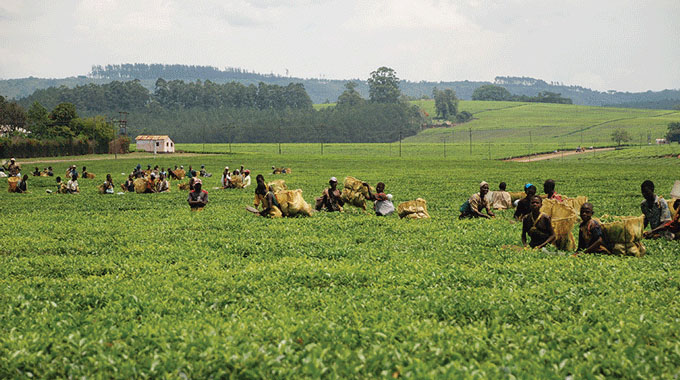 Ngoni Dapira
ZIMBABWE’s tea farming sector resurged in 2010 after prices had slumped in the late 1990s and presently over 1 200 farmers under the Honde Valley Smallholder Development Company are growing the green leaf.Last Thursday, the Honde Valley Small-holder Development Company in partnership with Honde Valley Tea Growers Association hosted a field day in Sagambe in Mutasa North where tea has transformed lives of most communal farmers in the area.
The small-holder programme is part of the Danida-funded Rural Agriculture Revitalisation Project, an initiative which seeks to facilitate the commercialisation of smallholder agriculture in Zimbabwe and promote improved household incomes, employment and food security.
The field day became a landmark for Zimbabwe smallholder farmers as they joined the global tea certification programme which is being prompted by SNV Zimbabwe, a Dutch international development organisation.
A total of 514 out-growers were certified by Rainforest Alliance and UTZ; internationally recognised tea certifiers.
The certification programme is part of the global campaign for sustainable agriculture network standards, which compel farmers to proactively address social and environmental challenges in farming as prerequisites to the global tea markets.
This is the first time in Zimbabwe that smallholder farmers have attained the prestigious certification. Prior to this, only large-scale plantations and commercial farmers achieved the Rainforest Alliance and UTZ Certifications.
SNV horticulture programme advisor Mr Cloffas Nyagumbo said after 2015 the global market would no longer buy non-certified tea as Rainforest Alliance and UTZ Certifications have become a necessity to assure sustainability of the tea-growing business in the world.
“The biggest international tea buyers have committed themselves to tackle climate change by buying products that come from sustainable farms.
“As a result, the year 2015 was set as the deadline for all tea growers to comply with internationally agreed sustainability standards. The certification ensures economic inclusion and access to global markets for Zimbabwean smallholder farmers,” said Mr Nyagumbo.
In Zimbabwe, the Tanganda Tea Company in Mutare and Wemba Factory in Sagambe in Mutasa North are the only functional tea factories.
Eastern Highlands Tea Estate is the main buyer of the green leaf from most of the out-growers in Mutasa, buying at 13 cents per kilogramme, which is the price for non-certified teas. Regionally certified tea, on the other hand is going for 25 cents to 35 cents.
HVSDC chairman Mr Patrick Chikomba, who was hosting the field day and is one of the certified farmers, expressed optimism that certification would change the low pricing of the green leaf.
“In April the international tea certifiers from UTZ and Rainforest Alliance came to assess us and we passed the international standards set for sustainable agriculture network.
“Basically, the Sustainable Agriculture Network is a coalition of non-profit conservation organisations in America, Africa, Europe and Asia promoting the environmental and social sustainability of agricultural activities through the development of standards for best practices, certification and training for rural farmers around the world.
“They focus on health and environmental best practices which in turn complement high productivity for farmers,” said Mr Mukomba.
Another farmer, Mr Siyaso Chawa, spoke highly about the certification benefits and how it will open markets.
“There was resistance from farmers about how to implement the certification standards because people found it senseless to put waste management pits, fire guards and all the other environmental standards.
“We are, however, slowly appreciating the benefits of this system especially when it comes to increase in tea prices by international markets and how it will make individual farmers recognised and certified internationally,” said Mr Chawa.
The guest of honour at the field day, Zanu-PF Manicaland chairman Ambassador Dr John Shumba Mvundura, who was standing in for the Minister of State for Manicaland Provincial Affairs, Cde Christopher Mushohwe, said certification was an important phase to empower out-growers.
“Certification is very important as it opens doors for our out-growers to international markets. The market for non-certified tea growers is shrinking slowly from what we have just heard and by joining the global certification programme, our farmers create more opportunities for themselves,” said Cde Mvundura.
The tea-growing industry is an important employer. Several small-holder farmers in Honde Valley spoke passionately about the self-enterprising benefits of the green leaf.
The out-growers, however, petitioned for an increase in the prices by the main buyer, Eastern Highlands from 13 cents to 25 cents, saying this would facilitate notable development in the district from the green leaf.
Ambassador Mvundura said the tea farming industry was important for employment creation, food security and nutrition, and value addition under the economic blueprint Zimbabwe Agenda for Sustainable Socio-Economic Transformation. He added that compliance with certification standards would secure markets and a stable income which addresses key livelihood issues for the local farmers.
Ambassador Mvundura encouraged out-growers to make use of the certification programme and start exporting their green leaf directly to the international market to get the best prices, rather than go through middlemen such as Eastern Highlands.



 Online Reporter