
FOR nearly a year now, Zimbabwean rugby has basked in the glow of a historic achievement.
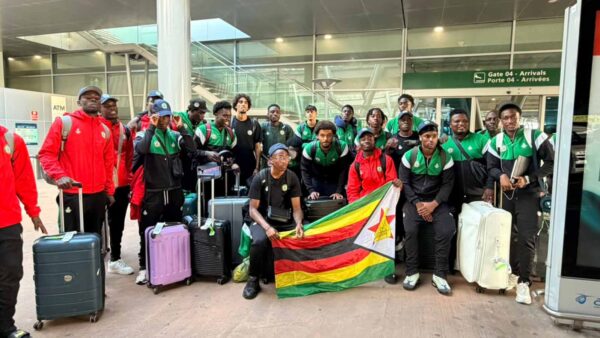
The Sables are going to the Rugby World Cup.
For the first time in 34 years, Zimbabwe will once again be represented on one of world sport’s biggest stages.
It is a remarkable accomplishment and one that deserves every celebration it has received.
Players, coaches, administrators, sponsors and supporters, the media all contributed to a journey that many believed would never happen.
History was made. In sport, history can also be deceptive.
It has a way of convincing people that the destination has been reached when, in reality, the journey has only just begun.
That is why last week’s 40-0 defeat to South Africa A may prove to be one of the most important results Zimbabwean rugby has experienced in recent years.
Not because of the scoreline or because it diminished what the Sables achieved but because it served as a timely reminder of the reality that awaits at World Cup level.
There is a significant difference between qualifying for a Rugby World Cup and competing at one.
The global stage is unforgiving.
The margins are smaller. The physical demands are greater. The depth of talent is infinitely deeper and the standards are higher.
The South Africa A match was a reminder that world rugby is not built on sentiment or nostalgia. It is built on systems, structures and sustained investment over many years.
The Sables earned their place at the World Cup. Now they must earn the right to compete effectively once they get there. More importantly, Zimbabwean rugby must ensure that it does not take another 34 years to return to this prestigious stage.
That should now become the central question confronting the Zimbabwe Rugby Union’s (ZRU) Interim Management Committee (IMC).
Qualification is already in the bag, the celebrations have happened, the congratulations have been received.
We believe the spotlight must now move beyond the senior national team and towards the systems that produce future Sables. Supporters and other rugby enthusiasts deserve to know what the long-term vision looks like.
What is the ZRU’s plan for provincial rugby? What is the strategy for local leagues especially a national club league? What is the union’s roadmap for women’s rugby?
How will schools rugby connect to club rugby and eventually to the national teams and how will talent be identified and developed beyond the traditional rugby strongholds?
These questions matter because national teams do not emerge from nowhere, they emerge from structures, systems and deliberate planning. Football has increasingly recognised this reality. ZRU could take a cue from ZIFA’s programmes such as the Munhumutapa Challenge Cup and the Roots Impact initiative which are designed not for today’s Warriors but the next generation of Warriors and Mighty Warriors.
Zimbabwe Cricket have also spent years strengthening provincial structures that ensure competitive cricket is played consistently throughout the year.
Even where results fluctuate, the pathways remain visible.
Tennis Zimbabwe, by contrast, however, continue to wrestle with questions around national reach and sustainable development despite periodic appearances on the international stage.
Zimbabwean rugby now stands at a similar crossroads. The danger is allowing World Cup qualification to become the achievement.
The opportunity is using qualification as a platform to build something much bigger.
One supporter captured the challenge perfectly following the South Africa A match.
The defeat, he argued, was a stark reminder that the World Cup stage is not “Mickey Mouse business but a platform where real rugby is played.”
There is truth in that observation. The World Cup exposes strengths as much as it does weaknesses.
And one weakness Zimbabwean rugby cannot afford to ignore is the limited number of competitive opportunities available to aspiring players outside established pathways.
A truly national rugby programme cannot be confined to a handful of schools, clubs or urban centres.
The next Sables captain could be sitting in Epworth, Makokoba or Bikita and the next world-class winger, our version of New Zealand’s late icon – Jonah Lomu – could yet be somewhere in Mutare while Gweru, Chinhoyi or Lupane, could be housing the next dominant forward.
Talent does not choose its birthplace but opportunity often does.
Without vibrant local leagues, provincial competitions and accessible development pathways, many gifted young athletes will never receive the platform needed to realise their potential.
Somewhere in Zimbabwe today there may well be a future international rugby star waiting for an opportunity.
The challenge for administrators is ensuring that opportunity exists.
That is why the coming months may ultimately prove more important than the qualification campaign itself.
The Sables will continue their preparations for the World Rugby Nations Cup and, ultimately, the World Cup.
But what happens away from the national team environment may matter even more.
The IMC, who must not put all their eggs in the Sables basket, have earned significant goodwill after the qualification success. Now they must convert that goodwill into lasting structures.
Supporters should not simply be hearing about World Rugby programmes and international competitions, they need to know what is being done about domestic competitions, provincial development, women’s rugby, coaching pathways and grassroots participation.
Most importantly, they should be seeing a clear plan for ensuring that World Cup qualification becomes a recurring expectation rather than a once-in-a-generation achievement.
Because that is the true measure of sporting progress not whether a team qualifies once but whether the structures are strong enough to keep qualifying.
The Sables have given the nation a moment to celebrate. Now rugby’s leaders must give Zimbabwean rugby a future to believe in. Qualification was a historic achievement but it was never meant to be the destination.
It was supposed to be the beginning.