admin
admin
Farirai Machivenyika Senior Reporter
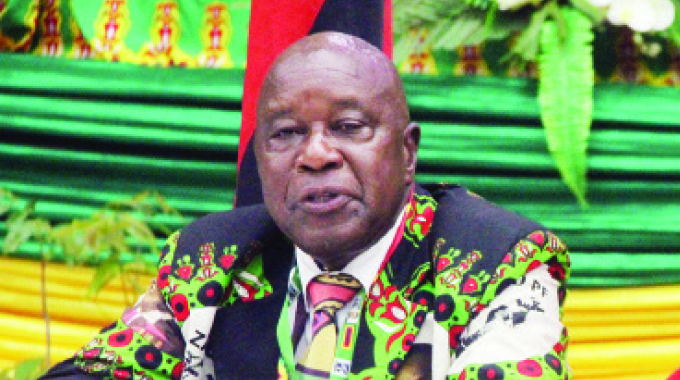
PARLIAMENTS and religious groups share an interdependent relationship and have a responsibility to promote dialogue among citizens and ensure they obey the rule of law, Speaker of the National Assembly, Advocate Jacob Mudenda, has said.
Adv Mudenda said this last week in Morocco at the Parliamentary Conference on Interfaith Dialogue, a conference jointly organised by the Inter-Parliamentary Union and the Parliament of Morocco in cooperation with Religions of Peace, the UN Alliance of Civilisations and the Mohammadia League of Religious Scholars.
It was held under the theme: “Parliaments and Religious Leaders: Promoting Dialogue, Working Together for Our Common Future”.
“From the onset, it can be conjured that Parliaments or indeed Parliamentarians share a symbiotic relationship with religious leaders. Both Parliamentarians and religious leaders are creatures of the citizenry. Citizens elect Parliamentarians to constitute the institution of Parliament which plays the tripartite roles of legislation, representation and executive oversight in the secular mould of serving the citizens as guided by constitutional and parliamentary democracy and the rule of law applicable to the citizenry.
“On the other hand, religious leaders are also chosen or anointed from the same populace but on the basis of theocracy and theological praxis.
“The legislator, through Parliament, shares the hallowed responsibility with the religious leader to promote dialogue and collegiate interface to ensure that citizens obey the rule of law, including those who profess their religion or belief, so that the normative morality of the law and that of religious tenets or beliefs creates beneficial mutual co-existence among citizens of a State. In that way, our common future of co-existentialism will be well grounded,” he said.
It was, therefore, imperative that conceptualisation of the interfaith dialogue must be predicated on the individual’s freedom of conscience. That was why in Zimbabwe, the Constitution affirms the sacrosanct nature of religion and beliefs as a fundamental right based on the freedom of conscience which includes freedom of thought, opinion, religion or belief and freedom to practise and propagate and give expression to their thought, opinion, religion or belief, whether in public or in private and whether alone or together with others.



 Online Reporter