Online Reporter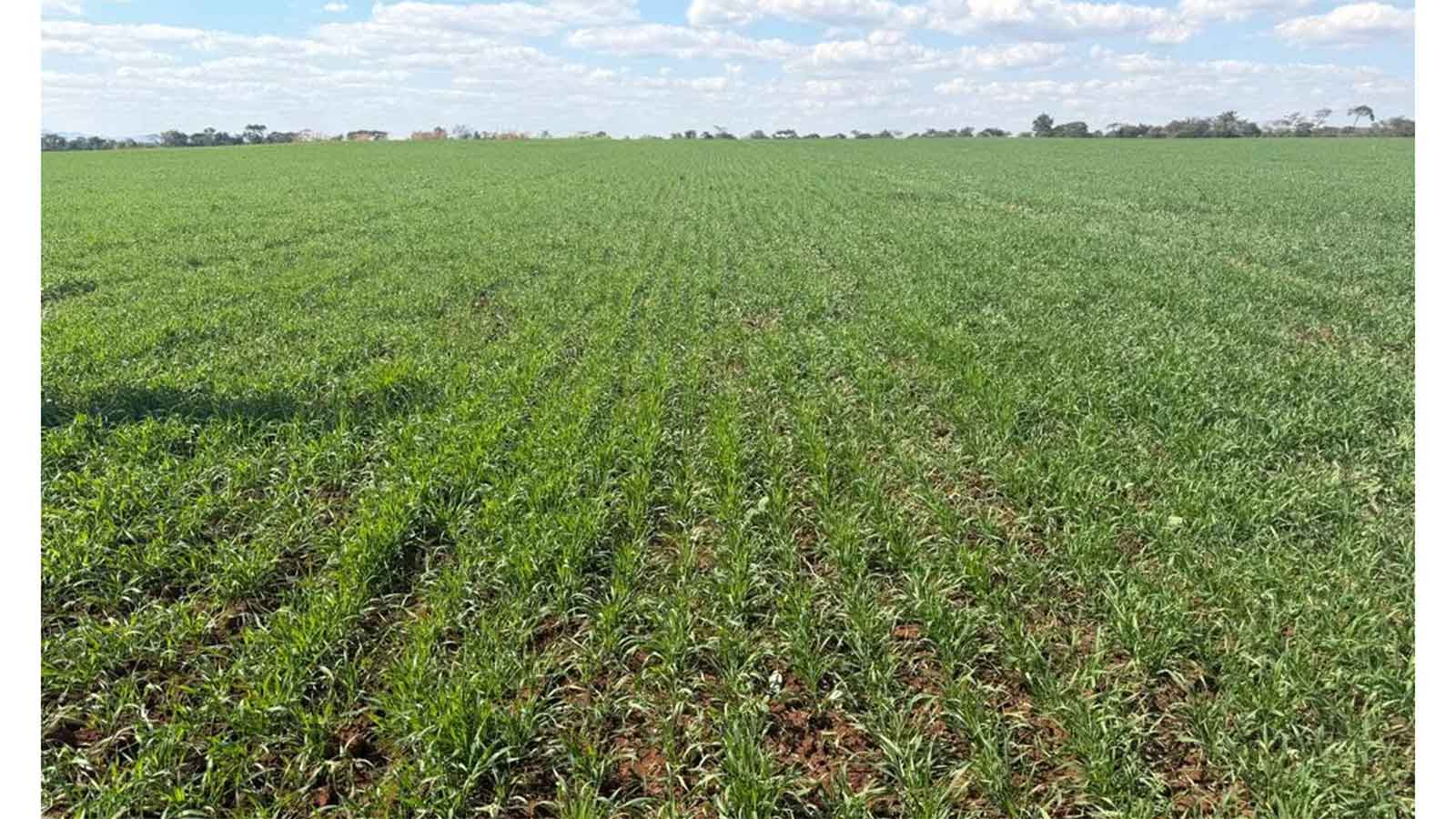
Debra Matabvu
Herald Reporter
Zimbabwe is on course to achieve another record-breaking winter wheat harvest, with the total area planted reaching 128 000 hectares, surpassing the seasonal target by 3 percent.
The country had set a target of 125 000 hectares under winter wheat this season, representing a 2,5 percent increase from last year’s planted area.
Based on current projections, the 2026 winter wheat crop is expected to produce approximately 662 500 tonnes of wheat, further strengthening national food security and consolidating the country’s self-sufficiency in wheat production.
The country’s winter wheat sector has recorded consecutive production milestones since 2022. A 56-year-old record was broken by harvesting over 375 000 tonnes from about 78 063 hectares, achieving national self-sufficiency for the first time.
Zimbabwe’s annual wheat requirement stands at approximately 360 000 tonnes.
Output rose to 467 905 tonnes in 2023 from 90 186 hectares, before increasing to 518 502 tonnes in 2024 from 106 238 hectares and peaking at 640 195 tonnes in 2025 from 122 146 hectares, as the country strengthened its position as a regional leader in wheat production and food security.
Presenting the post-Cabinet briefing on Tuesday, Information, Publicity and Broadcasting Services Minister Zhemu Soda said that to date 128 459 hectares of wheat have been planted.
“Regarding the Winter Wheat Production, a total of 128 459 hectares has been planted, surpassing the target of 125 000 hectares by 3 percent,” he said.
“ARDA has planted 59 880 hectares, representing 92 percent of the target.
“The target for barley remains 6 500 hectares and Irish potato 9 000 hectares, with an expected production of 243 850 metric tonnes.”
Posting on his micro-blogging site, X, Agriculture, Mechanisation and Water Resources Secretary, Professor Obert Jiri, said the country will ring-fence 150 000t of grain from this season’s winter crop and another 150 000t from the 2027 season.
He said the projected grain output from the winter cropping programme will strengthen Zimbabwe’s food self-sufficiency by boosting strategic grain reserves ahead of the anticipated El Niño-induced dry conditions.
The initiative forms part of broader Government efforts to build climate resilience and safeguard national food security in the face of adverse weather conditions.
“The response to the predicted Super El Niño in 2026/27 prioritises Pfumvudza/Intwasa and agro-ecological tailoring,” he said.
“In preparation for the forecasted Super El Niño, Zimbabwe will ring-fence 150 000t of grain for the Strategic Grain Reserve, secure 150 000t from this winter’s production and a further 150 000t from 2027 winter production. This ensures food security for vulnerable groups.”
Government is also scaling up production of traditional grains such as sorghum and millets, which are increasingly being promoted as climate-resilient substitutes for maize in drier regions.
To align production with ecological conditions, the Grain Marketing Board has introduced a grain swap programme allowing farmers and households to exchange traditional grains for maize, or vice versa, on a 1:1 ratio of up to five 50kg bags per month, ensuring dietary flexibility while strengthening national grain security systems.